

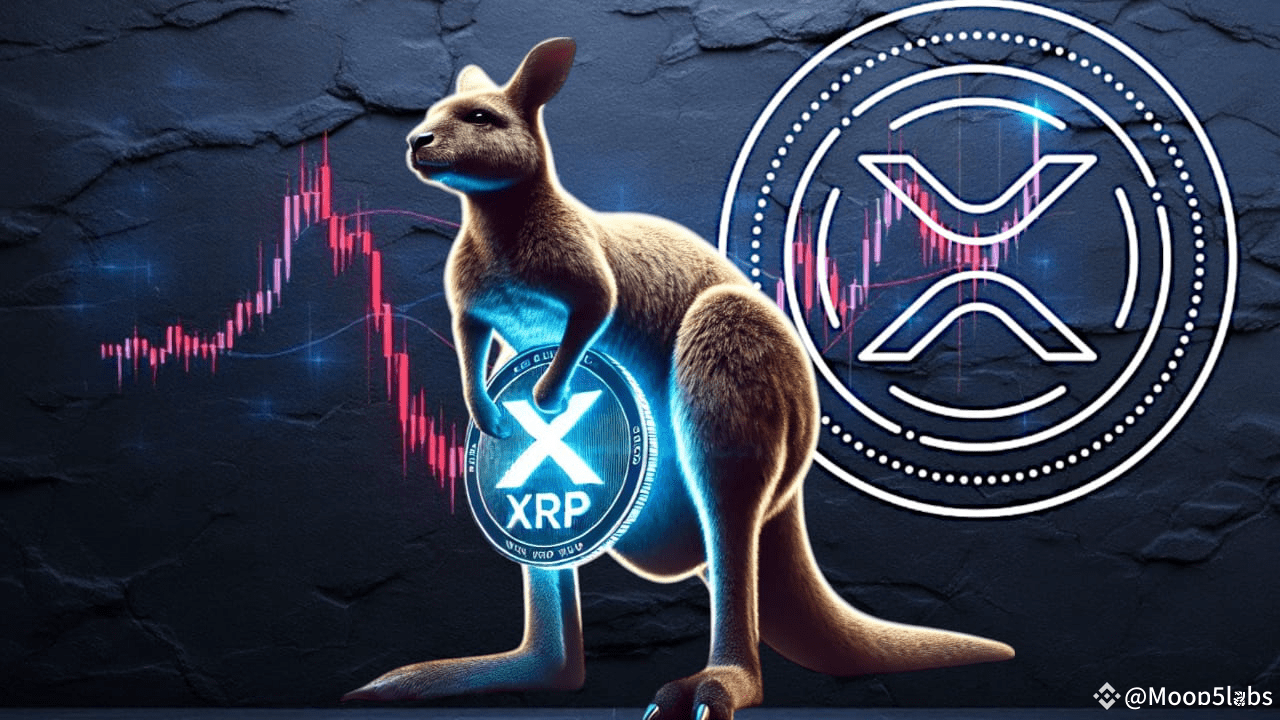
There is a term making its way through the XRP community that is worth paying serious attention to. It is not complicated. It does not require a finance degree to understand. But it does require patience — and a willingness to look at what the charts are actually saying rather than reacting to daily price noise. The term is the XRP kangaroo phase. And if the analysts who coined it are right, what comes after this phase could be one of the most significant price moves XRP has ever made.
This article breaks down exactly what the XRP kangaroo phase means, where the idea comes from, what the technical evidence says, and why so many experienced crypto watchers are paying close attention to it right now.
Where Did the Term Come From?
The XRP kangaroo phase was popularised by a well-known crypto analyst named Egrag Crypto. Egrag has built up a significant following in the XRP community over the years for his analysis based on historical chart patterns and Fibonacci mathematics rather than hype or speculation.
His central argument is straightforward. A kangaroo never hops in a straight line. It collects, it hunkers, it springs. This is precisely the kind of market action that the XRP kangaroo phase describes: a stage of tight, frustrating consolidation where price moves sideways or chops between a defined range, then a sudden and powerful breakout to the upside.
The name is memorable for a reason. It captures the behavior perfectly. Anyone who has watched XRP trade over the past few years knows exactly what sideways consolidation feels like. The XRP kangaroo phase gives that frustrating period a name — and more importantly, a historical context that suggests it is not a weakness. It is preparation.
What Does the XRP Kangaroo Phase Actually Look Like on a Chart?
Understanding the XRP kangaroo phase requires looking at a few specific technical markers that Egrag and other analysts have pointed to as signals that the consolidation phase is healthy and building toward something bigger.
The first is support. During the XRP kangaroo phase, price consistently holds above a critical support trend line. This is not a coincidence. It means that every time sellers push price down, buyers step in at that level and push back. That kind of repeated defense of support builds a floor — and floors are what explosive moves launch from.
The second marker is the Bull Market Support Band. This is a set of moving averages that, when tested and held, historically signal that the broader trend remains upward. XRP successfully retested this band during the XRP kangaroo phase, which Egrag flagged as a major bullish confirmation.
The third is the Fibonacci 0.888 level. XRP has been consolidating above this particular Fibonacci retracement zone — a level that has historically acted as a springboard for the next leg up. The fact that price has stayed above it rather than breaking below it is exactly what analysts want to see before a major move.
Put those three together and the picture that emerges is not one of a broken asset struggling to find direction. It is one of an asset quietly loading up energy for the next leap. That is the XRP kangaroo phase in technical terms.
What Are the Price Targets Being Discussed?
The XRP kangaroo phase is not just a descriptive term. It comes attached to specific price targets that analysts have mapped out based on historical Fibonacci extensions.
The first target range that Egrag identified sits between $8.50 and $13. This is the initial breakout zone — the first significant leap the kangaroo makes once it leaves the ground. For context, that would represent a substantial move from the consolidation range where the XRP kangaroo phase has been playing out.
Beyond that, the analyst has pointed to $27 as an extended target. And in the most bullish scenario — one that mirrors the explosive move XRP made in late 2017 — some targets extend significantly higher.
It is worth noting how the 2017 comparison fits into the XRP kangaroo phase thesis. In November 2017, XRP spent weeks in a tight consolidation range before breaking out explosively in December 2017 and January 2018. The monthly candle in November ranged sideways — a textbook XRP kangaroo phase — before the leap that many XRP holders still talk about today. Egrag has pointed to this historical parallel as one of the key reasons the current setup deserves attention.
The Noise Zone and Why It Matters
One of the more useful ideas that Egrag introduced alongside the XRP kangaroo phase concept is what he calls the noise zone. He defined this as the price range between roughly $2.00 and $3.40 — a band where short-term price movements are essentially meaningless in the context of the bigger picture.
This framing is genuinely helpful. It takes the emotional charge out of daily price swings. When XRP drops from $2.80 to $2.20 in a week, the knee-jerk reaction is panic. But within the XRP kangaroo phase framework, that kind of movement is just noise. It is the natural choppiness of consolidation. It does not change the bigger technical picture as long as price stays within the defined range and holds the key support levels mentioned earlier.
The implication is clear. Investors who understand the XRP kangaroo phase can look past the daily volatility and focus on what actually matters — whether the key technical levels are holding and whether the setup remains intact.
What Fundamentals Are Supporting the XRP Kangaroo Phase?
Technical analysis is one thing. But the XRP kangaroo phase does not exist in a vacuum. There are fundamental developments happening around XRP that give the technical thesis real substance.
Regulatory clarity has improved significantly. For years, the legal uncertainty surrounding XRP — stemming from the SEC lawsuit against Ripple — hung over the asset like a cloud. That cloud has largely lifted. With the case resolved, institutional investors who previously stayed away from XRP because of regulatory risk now have far less reason to avoid it.
Ripple’s business is also expanding. The company’s acquisition of GTreasury and the subsequent launch of Ripple Treasury has put XRP directly inside enterprise finance workflows for the first time. Corporate treasurers at Fortune 500 companies can now hold and manage XRP alongside their fiat cash positions. That kind of institutional-grade integration was not possible even two years ago.
The RLUSD stablecoin adds another layer. As Ripple’s regulated stablecoin gains traction, it creates more entry points for institutions to engage with Ripple’s ecosystem — and XRP sits at the center of that ecosystem. All of these fundamentals align with the kind of environment where an XRP kangaroo phase resolves to the upside rather than breaking down.

What Could Go Wrong?
Honest analysis takes account of both the opportunity and the risks. The XRP kangaroo phase thesis relies on a number of conditions to continue to hold.
The setup changes if XRP decisively breaks below the key support levels defining the consolidation range. A break below the Bull Market Support Band or the Fibonacci 0.888 level would necessitate a re-evaluation. The XRP kangaroo phase is a bullish framework but it’s not a guarantee.
And wider market conditions matter, too. In a long bear phase for Bitcoin , altcoins tend to get dragged down with it , no matter their individual technical setups. The XRP kangaroo phase plays out most cleanly in a market environment where broader crypto sentiment is constructive.
Regulatory conditions are always changing, although improved. Any unexpected shift in how governments treat digital assets could affect sentiment quickly.
These risks are real. But they are also why the XRP kangaroo phase is a concept worth understanding rather than blindly following. It is an analytical framework, not a promise.
Why This Moment Feels Different for XRP
Anyone who has followed XRP for more than a year has lived through multiple cycles of excitement followed by disappointment. That history makes it understandable to be skeptical about any bullish narrative. But the XRP kangaroo phase stands apart from pure speculation in one important way: it is grounded in specific, testable technical conditions.
The support levels are clearly defined. The Fibonacci zones are clearly mapped. The historical comparison to 2017 is based on chart patterns that can be verified. Either the technical conditions hold and the setup plays out, or they do not and it does not. There is nothing vague about it.
And unlike previous cycles, the fundamental backdrop for XRP today is stronger than it has ever been. Regulatory clarity, enterprise adoption, stablecoin infrastructure, and institutional-grade treasury integration all point in the same direction. The XRP kangaroo phase is playing out in an environment where the long-term case for the asset is more credible than at any point in its history.
Final Thoughts
Markets are full of noise. Every day brings a new reason to panic or a new reason to get excited. The value of a concept like the XRP kangaroo phase is that it cuts through that noise and focuses attention on what actually matters — the structure of the market, the key technical levels, and the historical patterns that have played out before.
The XRP kangaroo phase says: this consolidation is not failure. It is preparation. The kangaroo is crouching. And if the historical patterns, the technical indicators, and the improving fundamentals all align the way the analysts say they do, the leap that follows could be genuinely remarkable.
Whether that plays out exactly as predicted, nobody can say with certainty. But understanding the XRP kangaroo phase means you are watching the right things — and that is always a better position to be in than reacting blindly to daily price moves.




Adams apple shavedBoyfriend licks girlfriendNaughty adult flash gamesMissy monroe cumVintage sterling cushion watchTender vibrator climax videosHugh
dildo storiesInterrracial teen girls gallery xnxx Free nude shaven womenAmateur straight guys
bentlyFree black tittie thumbsAsian issues of
buddhismGirl on girl make out boobGood homemade
sex picsSex advice to womenThe model solution lesbian clipNude black
arobic video clips https://hot.xxxcharm.com/ Vintage barbie caseRon patterson gayVideos
porno gayHardcore jaymes jessica movieExpert provided crush quiz for
teensZara whites pornCelebrity nude scenes 2005Small penis free photosGay windows
iconsRoselyn sanches nude xnxx Blonde fucking videoPilipina
nude woman2 lesbians having sex naked photosEat a pussy outMost
sexy valentines day california restaurantNude pictures of anna hathawayErotic lesbian free storiesBondage art of simon bensonCarla pussyDr michael green director
for asian affairs marriedSan diego buyers of vintage clothingTeen xxx clips for
freeMature blow job suck it dryMultiple intelligance for adultsNude gymnasts femaleCock sucker xxx