


- First, What Is Pathmatics?
- Why Doesn’t Pathmatics Publish Its Pricing?
- Pathmatics Pricing: What the Numbers Actually Look Like
- What You’re Actually Getting for the Money
- Is There a Free Trial?
- Who Gets the Most Out of Pathmatics?
- How Does It Stack Up Against the Competition?
- So, Is Pathmatics Worth the Cost?
- The Bottom Line
Let’s be real — finding straight answers about Pathmatics pricing is not easy. You go to their website, click on pricing, and what do you get? A contact form. No numbers, no tiers, nothing you can actually work with. If you’ve been through that experience already, you’re probably frustrated. And honestly, that frustration is valid.
I’ve done the digging so you don’t have to. In this article, I’ll break down what Pathmatics actually costs based on real market data, what you’re getting for that money, who it makes sense for, and where it might fall short depending on your situation.
First, What Is Pathmatics?
If you’re already familiar with the tool, feel free to skip ahead. But for those who aren’t — Pathmatics pricing is a digital advertising intelligence platform. It launched in 2011, and in May 2021, Sensor Tower acquired it, which was a pretty big deal because it merged mobile app intelligence with digital ad data under one roof.
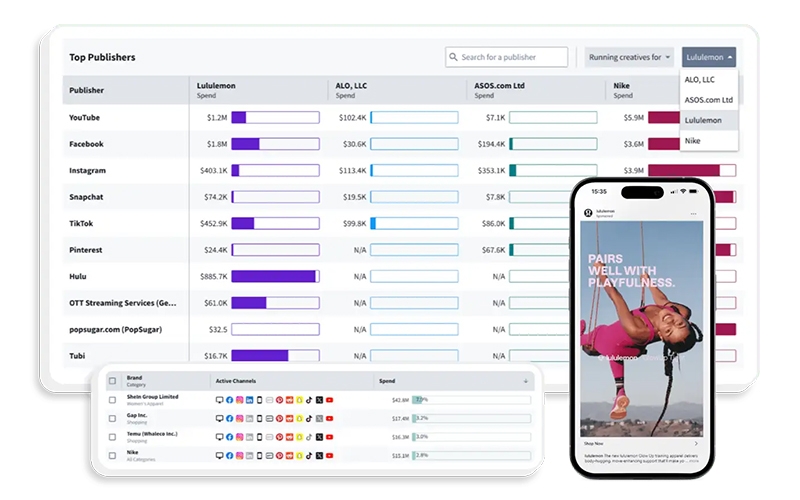
What the platform does, at its core, is show you what your competitors are doing with their advertising budgets. Not just how much they’re spending — but where they’re spending it, what their actual creatives look like, which publishers they’re working with, and how their strategy has shifted over time. It covers display, social, video, mobile, native, and OTT (streaming/connected TV) channels.
For brands, agencies, publishers, and ad tech companies, that kind of visibility is genuinely powerful. It’s the difference between guessing why a competitor is gaining market share and actually seeing their playbook.
Why Doesn’t Pathmatics Publish Its Pricing?
This is a fair question. The short answer is that Pathmatics pricing is an enterprise-grade tool, and enterprise software companies almost never post public prices. Their deals vary too much depending on company size, number of users, markets needed, channels required, and contract length.
What that means for you as a buyer is that you’re going to need to talk to their sales team to get a real quote. There’s no way around it. However, third-party research and user-reported data give us a solid ballpark to work with — and that’s what I’ll share below.
Pathmatics Pricing: What the Numbers Actually Look Like
Based on market research and third-party data, here’s how pricing tends to break down depending on the size of your operation.
Solo Users and Very Small Teams
If it’s just you — one seat, basic access — you’re looking at roughly $100 per month. That’s the entry point. It’s not a stripped-down free trial; it’s real platform access. But at that level, expect some limitations on how deep you can go into historical data and how many markets you can track.
Scale up to around ten users and the pricing moves to approximately $800 per month. That breaks down to about $80 per seat, which is actually pretty competitive if your team is actively using the data for pitches, strategy, or weekly competitive reporting.
Mid-Sized Companies
For a growing company with a legitimate marketing or media team, you’re typically looking at a few thousand dollars per month. Implementation costs at this level tend to run around $5,000 — and that’s not just a one-time fee for access. It covers onboarding, integrating the data into your existing workflow, and getting your team trained properly. Setup typically takes two to four weeks.
At this tier, you’re getting more historical data, broader channel coverage, and more flexibility in how you build and export reports.
Enterprise and Global Organizations
This is where the investment gets serious. Companies with around 100 users can expect monthly costs around $6,000. If you’re a global enterprise with a thousand users or more spread across multiple teams, countries, and business units, pricing can go well above $50,000 per month.
That sounds like a lot — and it is. But for a holding company managing dozens of client accounts, or a major brand running campaigns across multiple international markets simultaneously, the return on that kind of data can be enormous. You’re essentially getting a window into the entire competitive landscape of your industry.
What You’re Actually Getting for the Money
Regardless of which tier you’re on, here’s what Pathmatics pricing brings to the table.
Ad Spend and Impression Data
This is the foundation. You can see how much any brand in the system has spent on advertising, across channels, and how many impressions they’ve generated. That data becomes incredibly useful for benchmarking — knowing whether your budget is in line with your category, spotting when a competitor goes quiet, or catching an aggressive push before it catches you off guard.
The Creative Library
This is one of the more underrated features. Pathmatics pricing captures the actual ad creatives — the banner ads, social posts, video spots — that any brand is running. You can see the copy, the visual approach, the calls to action. If you’ve ever wondered how a competitor is messaging to customers in a market you’re trying to enter, this feature answers that question directly.
Publisher Relationships
You don’t just see where competitors are spending money in general. You can see specifically which publishers they’re buying placements from. For media buyers, that’s genuinely useful intelligence. It might reveal publishers you’ve overlooked or show you that a channel you’ve deprioritized is where a competitor is quietly dominating.
Channel Coverage
The platform covers display, social (Facebook, Instagram, and others), video, mobile, OTT/connected TV, and native. After the Sensor Tower acquisition, TikTok, YouTube mobile, and Snap were added — which matters a lot given how quickly spend has shifted to short-form video in the past few years.
Geographic Markets
Coverage spans the US, Canada, UK, Germany, France, Italy, Spain, Australia, and select regions in MENA, LATAM, and APAC. Global access is generally tied to higher pricing tiers, so if international markets are critical for you, make sure to factor that into your conversations with their sales team.
Data Exports
Reports can be exported as PDFs or CSVs. You can pull out spend tables, creative assets, publisher rankings, top advertiser lists — whatever you need to drop into a client presentation or internal strategy deck.
Is There a Free Trial?
Pathmatics doesn’t offer a free plan. There’s no freemium version or self-serve trial you can start without talking to someone. That said, free trials may be available on request, and you can absolutely request a demo before committing to anything.
If you’re seriously considering the tool, the demo is worth doing — and I’d suggest coming in with specific questions. Pull up a brand in your category and ask to see their spend data, their creative history, and their publisher footprint. That’ll tell you a lot about whether the depth of data actually matches what you need.
Who Gets the Most Out of Pathmatics?
Not every company will squeeze equal value out of this platform. Here’s an honest look at who benefits most.
Retail brands use it to track competitor ad budgets across social and display in real time, which helps them adjust their own spend in response to what’s happening in the market rather than reacting to it weeks later. CPG companies find it useful for comparing creative effectiveness during launches and seasonal campaigns when the stakes for getting your messaging right are particularly high.
Banks and fintech companies use it to reverse-engineer what competitors are doing to acquire customers — understanding which channels they prioritize, what audiences they seem to be targeting, and how their messaging evolves. Telecom brands track rival ad placements to time their own campaigns strategically and reduce the churn that comes from being outspent in a particular window.
For agencies, Pathmatics pricing often earns its keep on a single pitch. Walking into a new business meeting with hard data on a prospect’s competitive landscape — including specific competitor spend figures and creative examples — is a genuine differentiator. A lot of agencies factor the platform cost into their client retainers for exactly that reason.
How Does It Stack Up Against the Competition?
A few alternatives worth knowing about:
Similarweb is the most commonly mentioned alternative, and for good reason. It’s strong on traffic and digital performance data. But it’s broader in scope — it’s not an ad intelligence tool at its core, and the creative-level visibility just isn’t there the way it is in Pathmatics pricing.
Semrush is a solid pick for teams that want SEO, PPC, and competitive research bundled together. It’s more transparent on pricing and more accessible for smaller teams. But if ad creative tracking and spend data across display and social are your primary need, Semrush won’t match Pathmatics in that specific area.
MediaRadar is a direct competitor. It’s similarly focused on ad intelligence with good coverage across traditional and digital channels. Pricing is also enterprise-focused, and it tends to appeal more to publishers and media sellers than to brand teams or agencies.
If you’re primarily interested in mobile and app data alongside your digital ad intelligence, the full Sensor Tower platform — which now includes Pathmatics — could be worth exploring as an integrated package.
So, Is Pathmatics Worth the Cost?
Depends entirely on how you use it.
If you have a team that will actively pull data every week — tracking competitor movements, informing creative decisions, supporting pitches — the platform pays for itself reasonably quickly. The cost of building that same intelligence manually, through scattered research and piecemeal tools, is often higher than the subscription when you account for the time involved.
If you’re buying it to have it, pulling a report every few months, and not really building it into your workflow — you’ll probably feel like you’re overpaying. Like most intelligence tools, Pathmatics rewards active use.
For solo users and very small teams, the entry price around $100 a month is low enough that it’s worth a real trial if competitive ad data is relevant to what you do. For larger teams, the ROI case is stronger but also more dependent on having a clear plan for how the data will actually feed into decisions.
The Bottom Line
Pathmatics pricing doesn’t make its pricing easy to find — that’s just the reality of how the product is sold. But based on everything available, you’re looking at roughly $100/month for a single user, $800/month for small teams, a few thousand per month for mid-sized companies, and well into five figures monthly for large enterprise accounts.
The platform earns its price when the intelligence it provides is actively shaping strategy. If that describes how your team operates, it’s worth getting on a call with their sales team and seeing what a real quote looks like for your specific situation.
Come in with specific competitors you want to research, the channels that matter most to your business, and a clear sense of how many people need access. Those three things will shape your quote more than anything else — and they’ll also help you figure out pretty quickly whether Pathmatics is the right fit or whether a more affordable alternative might do the job just as well.




Hello! I ssimply would like tto give you a hue thumbs
up for the great information you’ve got right here on this
post. I’ll bbe returnming to our webb site for more soon. xnxx