

Let’s be honest — most people had never heard of an amicus brief before the SEC versus Ripple case blew up. And even fewer knew who Better Markets was. But if you’ve been following this legal drama, you already know that the SEC Ripple Better Markets amicus brief became one of the most talked-about documents in the entire crypto regulatory debate.
So let’s break it all down. No legal jargon. No fluff. Just the real story.
How Did We Even Get Here?
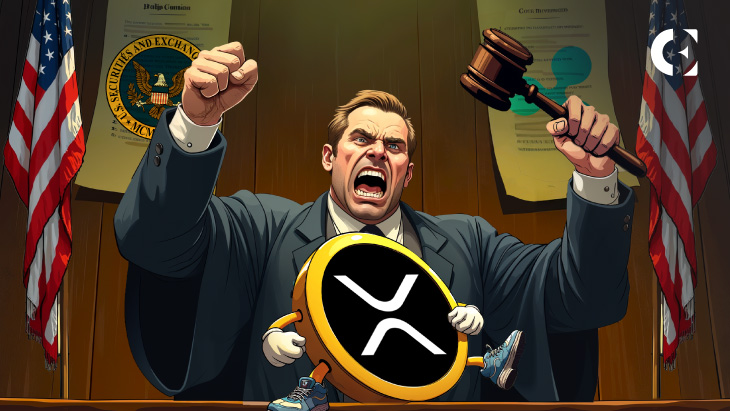
Back in December 2020, the SEC dropped a bombshell.They sued Ripple Labs Inc., its chief executive Brad Garlinghouse and co-founder Chris Larsen, claiming the company illegally raised more than $1.3 billion by selling XRP without registering it as a security.
Ripple’s response? Essentially — you’ve got the wrong guy. They argued XRP is a currency, not a security. Bitcoin isn’t regulated as a security. Ethereum isn’t either. Why should XRP be any different?
That argument actually had legs. And it made the SEC nervous enough that they needed all the support they could get. That’s where the SEC Ripple Better Markets amicus brief enters the picture.
So Who Is Better Markets?
Better Markets isn’t some obscure lobbying group. They were founded in 2010, right after the 2008 financial crash destroyed millions of Americans’ savings. Their whole mission is simple — keep Wall Street in check, protect ordinary investors, and make sure the rules actually mean something.
They’ve filed briefs in dozens of major financial cases over the years. But when the Ripple case started heating up, they saw something bigger than just one company and one token. They saw a potential crack in the entire foundation of U.S. investor protection law. So they stepped in.
The SEC Ripple Better Markets amicus brief was their way of telling the court — this case is bigger than Ripple. Get it wrong, and the entire crypto industry gets a free pass to ignore securities law forever.
What Does an Amicus Brief Actually Do?
Think of it like this. Two sides are arguing in court. A third party — someone with no direct stake in the outcome but a strong opinion — raises their hand and says “can I say something here?” That’s an amicus brief.
The court doesn’t have to listen. But judges often do, especially when the brief raises policy questions that go beyond the immediate case. And the SEC Ripple Better Markets amicus brief was packed with exactly those kinds of arguments.
Better Markets wasn’t just saying “the SEC is right.” They were saying — here’s what happens to the entire financial system if you rule in Ripple’s favor. Here’s who gets hurt. Here’s the precedent you’d be setting. That kind of big-picture reasoning is exactly what amicus briefs are designed to provide.
What Did the Brief Actually Argue?
The SEC Ripple Better Markets amicus brief made four arguments that really stood out.
The first one was about the Howey Test. This is the legal standard that courts use to determine whether something is a security. It asks four questions — was there an investment of money, in a common enterprise, with an expectation of profit, based on the efforts of others? Better Markets argued that XRP checks every single box. People bought XRP because they believed Ripple’s team would work hard to make it more valuable. That’s not a currency. That’s an investment.
The second argument was personal. Real people bought XRP without knowing the legal situation. They weren’t told about the risks. They weren’t told that Ripple was constantly selling XRP into the market — which puts downward pressure on price. The SEC Ripple Better Markets amicus brief put a human face on what could otherwise feel like a dry legal argument. These weren’t sophisticated hedge funds. These were regular people.
The third argument took direct aim at Ripple’s “fair notice” defense. Ripple kept saying — nobody warned us XRP would be treated as a security. Better Markets called that out as nonsense. Ripple had armies of lawyers. They raised over a billion dollars. The SEC’s framework has been in place since 1933. At what point does a company the size of Ripple stop getting to claim ignorance?
The fourth argument was the one that made people in the industry really nervous. The SEC Ripple Better Markets amicus brief warned that a Ripple win wouldn’t just affect Ripple. It would become a blueprint. Every token issuer in America would point to this ruling and say — see, we’re not securities either. The floodgates would open, and investor protections built over nearly a century would start to crumble.
The 2023 Ruling — Nobody Fully Won
In July 2023, Judge Analisa Torres issued her ruling. And it was genuinely surprising — not because one side won, but because neither did.
The judge found that XRP is not inherently a security. But she also found that Ripple’s direct sales to institutional investors — hedge funds, banks, large financial firms — did qualify as unregistered securities offerings. The programmatic sales on public exchanges were a different story. She ruled those didn’t meet the Howey Test because retail buyers weren’t directly investing based on Ripple’s efforts.
It was a split that left everyone scratching their heads. The SEC Ripple Better Markets amicus brief had pushed for a broader ruling that would have covered more of Ripple’s sales. They didn’t get that. But the institutional sales finding still gave the SEC something real to work with — and it confirmed that at least part of what Ripple did was illegal.
Why This Matters Beyond Ripple
Here’s the thing about the SEC Ripple Better Markets amicus brief — its impact didn’t stop with this one case.
The SEC’s enforcement actions against Binance and Coinbase both leaned heavily on arguments first tested in the Ripple case. The question of when a crypto transaction becomes a securities offering is now central to nearly every major regulatory fight in the U.S. And the framework Better Markets helped build in their brief is part of how courts and regulators are approaching these questions today.
Congress noticed too. The Ripple case is one of the main reasons FIT21 — the Financial Innovation and Technology for the 21st Century Act — even exists. Lawmakers looked at this legal mess and realized the country needs actual statutory rules for crypto, not just decades-old case law stretched to fit a technology nobody imagined in 1946.
The Other Side of the Argument
It wouldn’t be fair to leave out the criticism. And there was plenty of it.
A lot of people in the crypto world thought the SEC Ripple Better Markets amicus brief fundamentally missed the point of what XRP actually is. Ripple’s network is used by real banks and payment companies to move money across borders. XRP functions as a bridge currency in that system. That is genuinely different from someone buying stock in a company hoping to profit.
Some legal scholars went further, arguing that Better Markets was trying to force a square peg into a round hole. The Howey Test was designed in a completely different era, for completely different financial products. Applying it to blockchain-based digital assets without any guidance from Congress is a recipe for confusion — and the split ruling in 2023 kind of proved that point.
Where Things Stand Right Now
The case isn’t over. Both sides filed appeals. That means the arguments in the SEC Ripple Better Markets amicus brief will keep echoing through the federal court system for years to come. Better Markets has been clear — they’re staying involved.
The political winds have shifted somewhat. The SEC under its current leadership has shown a noticeably softer stance toward crypto than under Gary Gensler. Whether that affects the appeals or leads to a settlement, nobody knows yet.
What we do know is that the SEC Ripple Better Markets amicus brief helped force a national conversation about how America regulates digital assets. That conversation is still happening — in courtrooms, in Congress, and in every corner of the financial industry.
Final Thoughts
The SEC Ripple Better Markets amicus brief is one of those documents that looks dry on the surface but carries enormous real-world consequences underneath. It shaped a landmark ruling. It influenced future enforcement actions. And it helped define the terms of a regulatory debate that will determine how trillions of dollars in digital assets are governed going forward.
You don’t have to agree with Better Markets’ position to appreciate what they did. They showed up, made their arguments, and forced everyone — the court, Congress, the industry — to take the underlying questions seriously.
And in a space as chaotic and fast-moving as crypto, that actually matters quite a bit.
More Information visit To : Techwierlab.com
Admin Email: Richardcharles0020@gmail.com
Admin Email: Richardcharles0020@gmail.com