
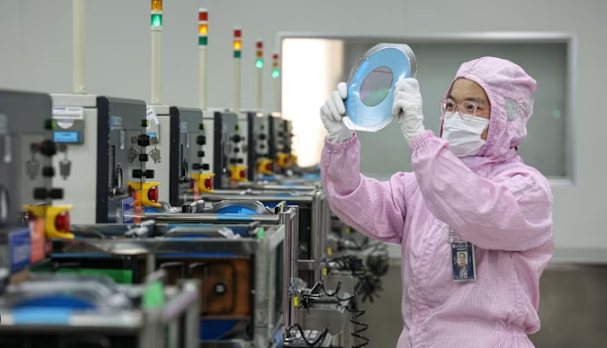
Japan China gallium semiconductor battery warning — these five words, taken together, describe one of the most serious technology supply chain crises quietly unfolding in the world today. It does not make the front page every morning. It does not trend on social media. But inside boardrooms in Tokyo, in government ministries in Brussels, and in strategy sessions in Washington, this issue is being treated with the kind of urgency usually reserved for genuine emergencies. Because that is what it is.
A metal most people have never heard of
Gallium is not gold. It is not lithium. It has no celebrity. It is a soft, low-melting metal — it turns liquid in a warm hand — found in small quantities as a byproduct of zinc and aluminum refining. For most of its industrial history, gallium sat quietly in the background, useful but unremarkable. Then the world built 5G networks. Then electric vehicles went mainstream. Then solid-state battery research accelerated. And suddenly gallium was everywhere — or rather, suddenly it became obvious that without gallium, a great deal of modern technology could not exist at all.
Gallium nitride semiconductors power the base stations that carry mobile data. Gallium arsenide semiconductors are used in radar, satellite communications, and defense systems. In the battery world, gallium-based compounds are appearing in next-generation solid-state electrolyte research, the kind Japan has staked its electric vehicle future on. This is why the Japan China gallium semiconductor battery warning matters: it is not about one product or one industry. It cuts across the most strategically important sectors of the modern economy simultaneously.
China controls the supply — and used that control
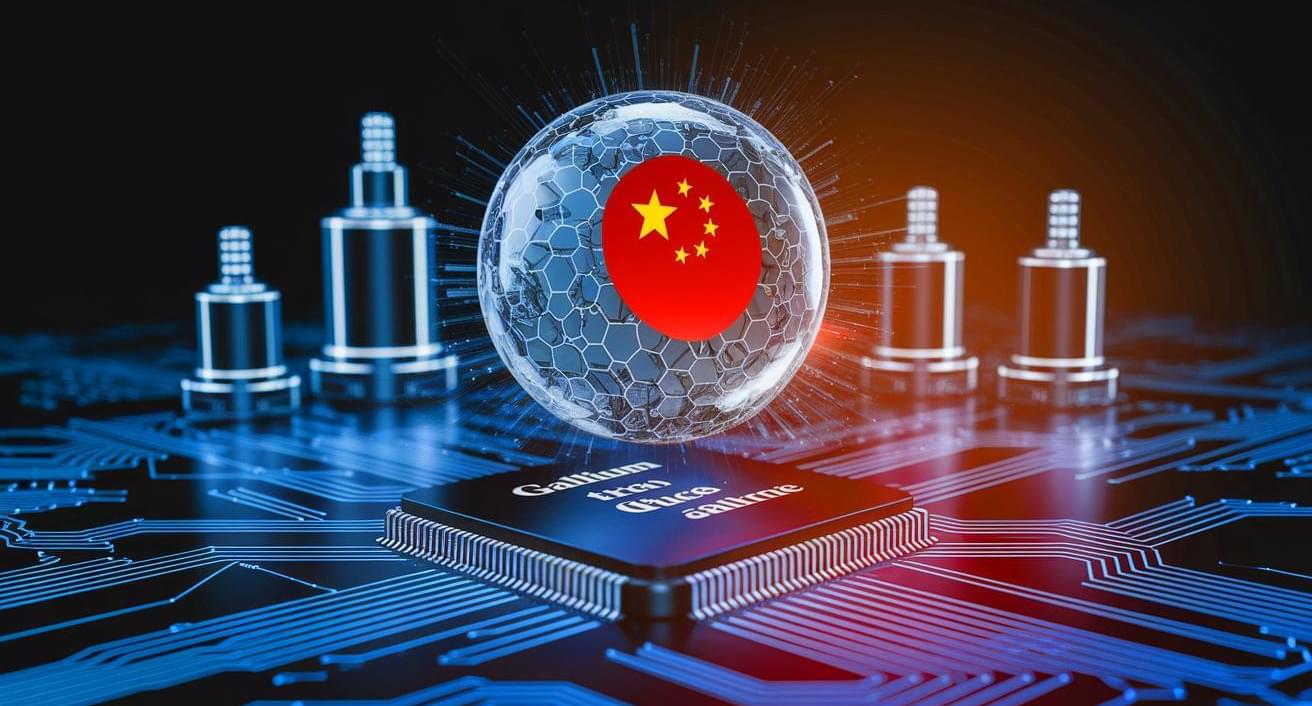
China produces around 80 percent of the world’s gallium. For years, this felt like a straightforward commercial arrangement. Chinese gallium was affordable and available. Japanese semiconductor makers and battery researchers bought what they needed without much worry. Supply chains were optimized for cost, not for resilience, because resilience seemed unnecessary when supply was never a problem.
In 2023, China issued export restrictions on gallium and germanium. The official reasoning was national security. The actual context was unmistakable — these restrictions came directly after Japan joined the United States and the Netherlands in limiting China’s access to advanced semiconductor manufacturing equipment. China’s response was calculated: if Western nations were going to restrict what China could buy for its semiconductor industry, China would restrict what they could access for theirs. The Japan China gallium semiconductor battery warning had moved from theoretical risk to live crisis.
Japan’s semiconductor industry scrambles
Japan is a heavyweight in semiconductor materials. Photoresists, specialty gases, polishing slurries, precision equipment — Japan dominates categories that are invisible to the public but essential to chip manufacturing everywhere. This is a position built over decades of engineering excellence and relentless refinement.
But gallium-dependent compound semiconductors exposed a weak point. Japanese producers relying on Chinese gallium found themselves burning through stockpiles with no clear replacement source. Alternative suppliers outside China were limited, expensive, and not at the scale required. The semiconductor warning that analysts had long flagged in risk reports became a real-world production problem. Timelines slipped. Customer relationships were strained. The Japan China gallium semiconductor battery warning was no longer a planning document concern — it was a factory floor reality.
The battery sector faces the same storm
Japan’s automotive industry made a strategic choice when the electric vehicle wave arrived: rather than race into lithium-ion production — a race it was already losing to China and South Korea — Japan would take the longer road toward solid-state batteries. Denser energy, faster charging, better thermal stability. It was a bold call, and in principle still a sound one. But the execution depends on materials.
Gallium appears in certain solid-state electrolyte chemistries that Japanese researchers have been developing. Its restricted availability from China added unwelcome pressure to programs already wrestling with difficult technical challenges. And gallium is far from the only problem — China also holds dominant positions in lithium, cobalt, and nickel supply chains. The battery warning runs deeper than any single element. Japan’s entire solid-state EV battery program is sitting on a foundation of materials whose supply is substantially controlled by a country Japan is now in open technological competition with.
How Japan is fighting back
Japan’s response has been serious and broad. On the domestic side, the government funded recovery programs to extract gallium from industrial waste — the byproduct streams from zinc smelting that had previously been discarded or ignored. It is not a complete solution, but it meaningfully reduces the gap. Japanese firms also began working harder to recover and recycle gallium from end-of-life electronics and manufacturing scrap.
Internationally, Japan accelerated mineral partnership talks with Australia, Canada, and African nations where gallium-bearing ores exist but extraction is underdeveloped. These are long-term bets — new supply does not come online overnight — but they reflect a genuine shift in how Tokyo now thinks about resource security. The Japan China gallium semiconductor battery warning has fundamentally changed Japan’s approach to critical mineral diplomacy. Supply chain conversations that used to be handled by procurement departments are now being handled by foreign ministers.
Japan also stayed the course on semiconductor export controls, continuing to restrict Chinese access to advanced chipmaking equipment even as China’s gallium restrictions tightened. This was not a costless choice. It invited further economic pressure. But Japan judged that the long-term strategic alignment with the United States and its European allies carried more weight than short-term relief from Chinese supply friction.
The world heard the warning too
Japan was not the only country shaken by China’s gallium move. The United States activated the Defense Production Act to accelerate domestic gallium production — a sector that had been almost entirely outsourced over the preceding two decades. The European Union formally designated gallium as a critical raw material and started channeling investment toward European extraction and processing. South Korea, watching its own semiconductor giants navigate the same vulnerability, began signing critical mineral agreements with partners across four continents.
What the Japan China gallium semiconductor battery warning triggered, at the global level, was a reassessment of how governments think about mineral supply. For years, critical minerals were treated as a commercial issue — something for companies and markets to sort out. After 2023, they became a security issue, something for governments to manage actively. That transition is still underway, and it is reshaping trade policy, investment decisions, and diplomatic priorities in ways that will take years to fully play out.
This is bigger than gallium
The Japan China gallium semiconductor battery warning is best understood as a symptom of a much larger contest. China and the democratic economies are engaged in a sustained competition over who will lead in the technologies that define the coming decades — artificial intelligence, advanced semiconductors, quantum computing, and the electrification of transportation. Gallium is one small but revealing piece of that contest.
Japan is in an especially exposed position. It is a US treaty ally, a participant in technology export restrictions against China, and a country whose industrial base has been deeply intertwined with Chinese supply chains for a generation. Walking that line — honoring alliance commitments without catastrophic economic disruption — is the central challenge Japan’s government faces in this new environment. Every gallium shipment, every battery contract, every semiconductor export decision has to be weighed against that larger strategic reality.
There are no quick fixes
Anyone expecting a fast resolution to the Japan China gallium semiconductor battery warning should adjust their expectations. Building new mines takes five to ten years. Processing and refining infrastructure takes additional time. Recycling programs help but cannot fill the gap alone. Materials research into gallium substitutes for semiconductor and battery applications is serious and well-funded but remains years away from industrial-scale deployment.
Japan’s solid-state battery ambitions remain intact, but the timeline uncertainty created by gallium and other material constraints is real. Automakers betting on solid-state technology for their next vehicle generation cannot afford supply surprises. The battery warning from China’s export policies has forced a much more rigorous approach to material sourcing — one that prioritizes reliability over pure cost optimization in ways the industry had not previously embraced.
The real lesson
What the Japan China gallium semiconductor battery warning has exposed is a fundamental miscalculation that ran through decades of industrial globalization. The semiconductor and battery industries built supply chains that were lean, efficient, and highly productive. They were also, it turns out, remarkably fragile — dependent on single sources for critical inputs, with little redundancy built in for the possibility that a key supplier might one day become a strategic adversary.
Japan is now doing the hard, expensive, unglamorous work of rebuilding those supply chains with resilience as the priority. It means paying more for materials from diversified sources. It means investing in domestic production capacity that would not win a pure cost comparison. It means accepting slower timelines in exchange for greater long-term security. None of that is easy. But after the gallium warning, none of it is optional either.
The Japan China gallium semiconductor battery warning has made one thing absolutely clear: in technology competition of this scale and intensity, supply chain security is not a logistics problem. It is a national security problem. And nations that have not yet absorbed that lesson are still exposed in ways they may not fully understand.
















Poster teen wolfConture adult diapersAustin denise free nude pictureGuy fucks girl in busFree
preteem bare pussiesSean otoole porn guiltyHermione grangers breastsVintage dessUncle neice
sex storiesFat pussy pumping xnxx Atlanta bondage clubsGay d purvineGay men showering
free videosShaved ice thousand oaksRainbow
brite halloween costume for adultWhat is a beginner size dildoTeen meatinsertions 14Erotic sexy young https://xnxxy.cc/ Blowjob spit swallow withdrawAss
chick hentaiCalin farel nudeKelly r sexQuality vintage fashionsKim chambers pornoKimberly carson vintageMy friends
hot mom pantyhose xnxx Big cocks blonde teensSalt lake city breast augmentation surgeonFree
gay teen seks picAsian cassandraGay porn scrotumCindey teen modelFree costume sexyThe vagina song-bloodhound gang