
I want to start this one with a confession.
- What ChargePoint Actually Is
- The Numbers: Painful Past, Cautious Recovery
- What Analysts Say About the ChargePoint Stock Price Prediction 2030
- 7 Things That Will Decide the ChargePoint Stock Price Prediction 2030
- 1. The SaaS Transition Has to Actually Work
- 2. The Eaton Partnership Is More Important Than Most People Realize
- 3. The EV Adoption Rate Is the Macro Variable Nobody Controls
- 4. Government Funding Is a Real Tailwind — But Uncertain
- 5. The Debt Situation Has Improved — But Watch It Closely
- 6. Competition Is Intensifying From Multiple Directions
- 7. The Path to GAAP Profitability Is Still Long
- The Honest Bull and Bear Cases
- My Honest Take
A few years ago, I was genuinely excited about ChargePoint. The EV boom was everywhere. Every car company on earth was promising an all-electric future. Government money was flooding into charging infrastructure. And ChargePoint — operating one of the largest EV charging networks in North America and Europe — looked like it was sitting right in the middle of a once-in-a-generation infrastructure buildout.
Then reality showed up.
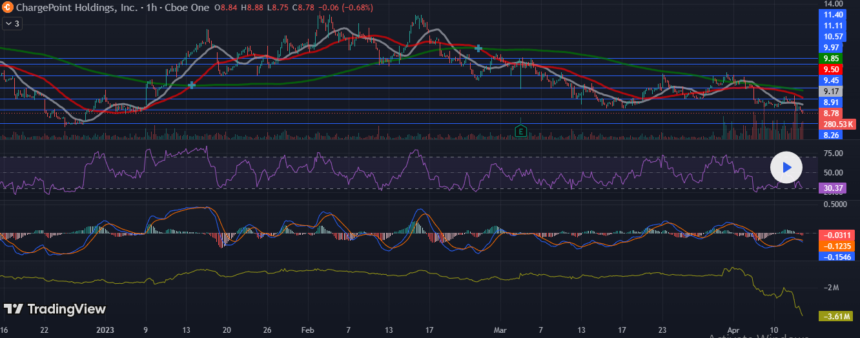
The stock, which had touched highs above $40 post-SPAC merger, spent the next several years in a painful, relentless decline. Securities class action lawsuits were filed. Revenue shrank. Losses continued piling up. And a lot of investors who bought into the EV infrastructure story found themselves holding a stock that kept going down.
So when I sat down to think seriously about the chargepoint stock price prediction 2030, I didn’t approach it with excitement. I approached it with a healthy dose of skepticism — and also with a genuine commitment to follow the data wherever it led. Because the honest answer on ChargePoint right now is more complicated than either the bulls or the bears will tell you.
Let me walk you through what I found.
What ChargePoint Actually Is
Before the chargepoint stock price prediction 2030 makes any sense, you need to understand what this company actually does and what it’s trying to become.
ChargePoint Holdings, Inc. trades on NYSE under the ticker CHPT. Founded in 2007, it’s one of the oldest players in the EV charging space — not some freshly minted SPAC with a PowerPoint and a dream. The company designs, develops, and sells networked EV charging hardware and cloud-based software services. It operates across both commercial and fleet charging segments in the US, Canada, and Europe.
The key thing to understand is that ChargePoint is not purely a hardware company anymore — and that distinction matters enormously for the chargepoint stock price prediction 2030. The company is actively transitioning toward a Software-as-a-Service model where the real long-term value comes from subscription revenue on top of its installed charging hardware base. Every charging station ChargePoint sells carries the potential for a recurring software subscription that generates high-margin revenue year after year.
That SaaS pivot is the central thesis for anyone who believes in ChargePoint’s future. Whether it works is the central question.
The Numbers: Painful Past, Cautious Recovery
Here’s the financial picture as it actually stands.
ChargePoint went through a genuinely rough stretch. Revenue peaked and then contracted. The company burned through cash at a rate that scared investors. In fiscal Q4 of 2025, revenue came in at about $102 million — down 12% year-over-year. That kind of number, for a company that was supposed to be riding an EV tailwind, caused justifiable concern.
But then something started shifting. By Q1 of fiscal 2026, revenue was $98 million, with subscription revenue growing 14% year-over-year. In Q2, revenue hit $99 million with gross margin improving to 31% GAAP — a meaningful improvement from the 19% the company was posting a year earlier. Q3 fiscal 2026 brought $106 million in revenue, up 6% year-over-year, and subscription revenue grew 15%. And the company announced it had reduced its debt by $172 million — more than 50% — in a post-quarter debt exchange. That’s a real balance sheet improvement.
Most recently, Q1 of fiscal 2027 (ending April 30, 2026) showed revenue of $102 million — up 4% year-over-year — and marked the third consecutive quarter of year-over-year revenue growth. CEO Rick Wilmer called it “a strong start to the year.”
Three consecutive quarters of growth after a painful contraction. Gross margins at record highs. Debt cut in half. It’s not a triumphant recovery story yet — but it’s no longer a pure death spiral either. And that context matters a lot when you’re trying to build a realistic chargepoint stock price prediction 2030.
What Analysts Say About the ChargePoint Stock Price Prediction 2030
Let me be upfront: the analyst picture on CHPT right now is not inspiring. The consensus rating is “Hold” — not exactly a ringing endorsement. The average 12-month price target from 9 covering analysts is around $9.67. The high target is $20. The low is $5.
One analyst maintained a Sell rating with a $5 price target as recently as June 2026, citing “modest growth and ongoing losses.” That’s the near-term reality.
For the longer-term chargepoint stock price prediction 2030, the range is enormous — which is almost always a signal of genuine uncertainty rather than analyst confusion. StockScan projects a 2030 average of around $10.53, with a high of $14.66. Bitget’s aggregation of Wall Street models puts the chargepoint stock price prediction 2030 somewhere between $11.80 and $59. WalletInvestor’s technical model, at the more optimistic end, projects around $40 by 2030 based on a momentum recovery scenario. On the pessimistic end, purely technical models project the stock could stay flat or even fall below current levels.
The wide range tells you the same thing it always does: the chargepoint stock price prediction 2030 is not a math problem. It’s a judgment call about whether this company can successfully execute a business model transition in a sector that still has massive regulatory and competitive uncertainty.
7 Things That Will Decide the ChargePoint Stock Price Prediction 2030
1. The SaaS Transition Has to Actually Work
This is the single most important factor in the chargepoint stock price prediction 2030. Right now, subscription revenue is around $41–$42 million per quarter and growing in the low-to-mid teens percentage-wise. If that subscription base keeps compounding — as the installed hardware base grows and more customers sign up for software tiers — ChargePoint starts to look like a very different business by 2028 or 2029. High-margin recurring revenue changes everything: the multiple investors will pay, the cash flow profile, the path to profitability. If subscription growth stalls or hardware sales keep dragging the mix the wrong way, the chargepoint stock price prediction 2030 stays depressed.
2. The Eaton Partnership Is More Important Than Most People Realize
In early 2025, ChargePoint announced what they called an industry-first partnership with Eaton Corporation — a major power management company. The collaboration integrates EV charging with Eaton’s power infrastructure expertise, develops “Express Grid” modular fast charging technology, and gives ChargePoint access to Eaton’s extensive distribution channels across North America and Europe. They also launched the Express Solo — described as the world’s fastest standalone EV charger for mass-market passenger EVs.
This partnership matters because it gives ChargePoint distribution and credibility it couldn’t easily build alone. Eaton is not a startup. It works with utilities, building operators, and commercial customers at scale. If ChargePoint can effectively ride that distribution network, it changes the chargepoint stock price prediction 2030 outlook meaningfully. This is a factor that not enough analysts are pricing in adequately.
3. The EV Adoption Rate Is the Macro Variable Nobody Controls
Here’s the uncomfortable truth about any chargepoint stock price prediction 2030: ChargePoint’s fate is tied to how quickly people actually adopt electric vehicles — and that rate has been slower than the most optimistic projections from 2021 and 2022. High interest rates made EVs more expensive to finance. Infrastructure anxiety remains a real consumer concern. And political headwinds around EV mandates have created uncertainty.
If EV adoption accelerates meaningfully through 2027 and 2028 — particularly in fleet and commercial segments where ChargePoint is strongest — the company’s hardware and subscription revenue both grow. If adoption stays sluggish, ChargePoint’s growth ceiling is lower. This is a macro variable the company can’t control and investors have to accept.
4. Government Funding Is a Real Tailwind — But Uncertain
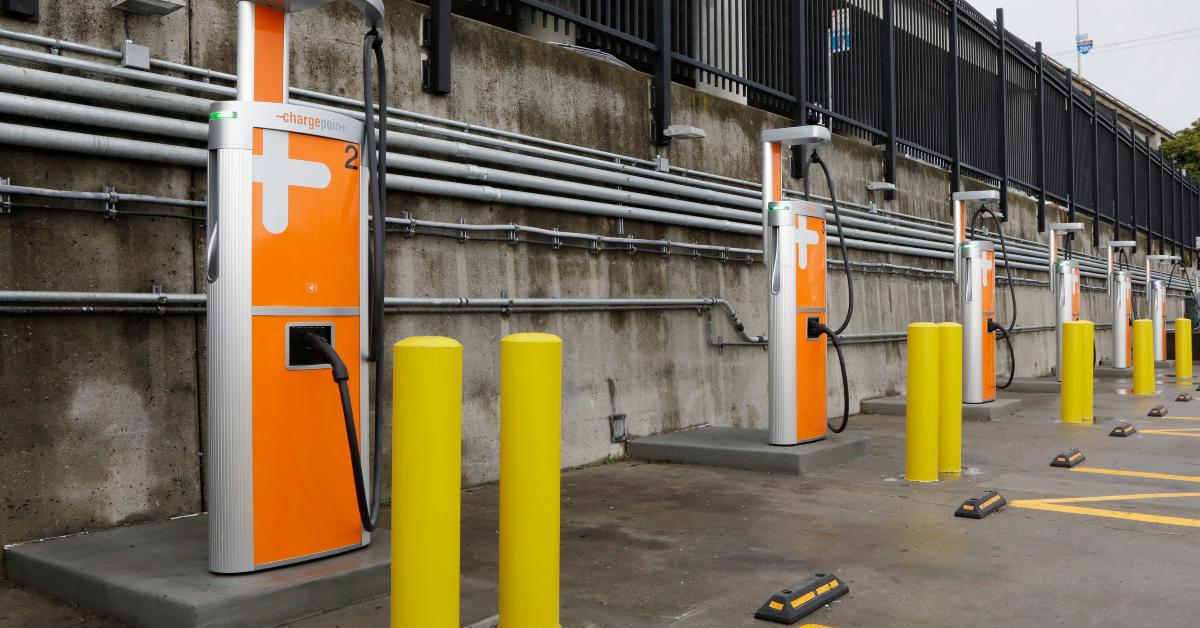
The US National Electric Vehicle Infrastructure program provides billions in federal subsidies for EV charging deployment. ChargePoint is well-positioned to benefit from NEVI-funded installations across the country. In Europe, strict carbon emission regulations continue driving commercial adoption of charging networks. These government programs are meaningful revenue drivers for ChargePoint.
But government funding programs are also politically vulnerable. Changes in administration, budget pressures, or shifting policy priorities can slow the flow of public money into EV infrastructure. The chargepoint stock price prediction 2030 is partly a bet on sustained government commitment to EV infrastructure — which is not guaranteed.
5. The Debt Situation Has Improved — But Watch It Closely
ChargePoint has been burning cash for years. One of the most significant recent developments was the post-quarter debt reduction in late 2025 — cutting debt by over $172 million, more than 50%. That kind of balance sheet improvement reduces near-term liquidity risk and gives management more room to invest in growth without being constantly squeezed by debt service.
The question for the chargepoint stock price prediction 2030 is whether the company can reach cash flow breakeven before it needs to raise more capital. If it can — and the gross margin improvement trajectory suggests it’s moving in the right direction — the investment thesis gets much cleaner. If another dilutive capital raise is needed, existing shareholders absorb the cost.
6. Competition Is Intensifying From Multiple Directions
ChargePoint is not operating in a quiet corner of the market. Tesla’s Supercharger network — now open to non-Tesla vehicles — is a formidable competitor for consumer-facing charging. Blink Charging, EVgo, and other pure-play charging companies are competing for the same commercial contracts. And technology giants and utilities are increasingly investing in their own charging infrastructure.
ChargePoint’s competitive advantages are its network size, its software platform, and its relationships with commercial property owners and fleet operators. But those advantages have to be actively defended, not taken for granted. Any chargepoint stock price prediction 2030 model that doesn’t account for this competitive pressure is missing something real.
7. The Path to GAAP Profitability Is Still Long
Let me be direct about this one. ChargePoint is still losing money — Q4 fiscal 2026 showed a GAAP net loss of $44.4 million, which is actually an improvement from the $64.6 million loss a year earlier. The losses are shrinking. Operating expenses are coming down. Gross margins are improving. But the company is not profitable yet, and investors have to be honest about that.
For the chargepoint stock price prediction 2030 to play out anywhere near the bullish scenarios, the company needs to reach GAAP profitability — or at minimum, clear free cash flow — somewhere in the 2027–2028 timeframe. That would require subscription revenue to keep growing, hardware margins to stabilize, and operating expenses to stay disciplined. It’s achievable. It’s not guaranteed.
The Honest Bull and Bear Cases
Bull Case: EV adoption accelerates. The Eaton partnership drives meaningful distribution expansion. Subscription revenue compounds to become the dominant part of the revenue mix. Gross margins continue improving. GAAP profitability arrives by 2028. Government NEVI funding flows through efficiently. The chargepoint stock price prediction 2030 lands in the $20–$40 range — real money from current prices.
Bear Case: EV adoption stalls due to economic headwinds or policy reversals. Hardware revenue stays flat. Subscription growth slows. Losses persist longer than expected. Another dilutive capital raise is needed. The chargepoint stock price prediction 2030 stays in the $5–$8 range — barely better than where it trades now, after years of waiting.
The realistic answer is probably somewhere between those two scenarios — which is exactly why the current analyst consensus is “Hold” rather than either a strong buy or a strong sell.
My Honest Take
I went into this analysis skeptical of ChargePoint. I came out of it… cautiously interested. Not excited. Not recommending you run out and buy it tomorrow. But more interested than I expected to be.
The company has made real progress. Gross margins are at record highs. Debt has been cut substantially. Three consecutive quarters of revenue growth after a painful contraction is not nothing. The Eaton partnership is a legitimate strategic asset. And the SaaS transition, while early, is moving in the right direction.
But the risks are just as real. The EV adoption curve is uncertain. Competition is fierce. Profitability is still years away. And the stock has already destroyed a lot of investor wealth once — which is a reminder that good long-term stories can still produce terrible intermediate-term outcomes for impatient investors.
The chargepoint stock price prediction 2030 is a bet that this company survives its current transition, reaches profitability, and benefits from a larger EV market than exists today. If all three of those things happen, the stock is interesting at current levels. If any of them fail to materialize, the wait could be very painful.
Whatever you decide — go in clear-eyed. The chargepoint stock price prediction 2030 is not a layup. It is a calculated risk in one of the most uncertain sectors in public markets.