

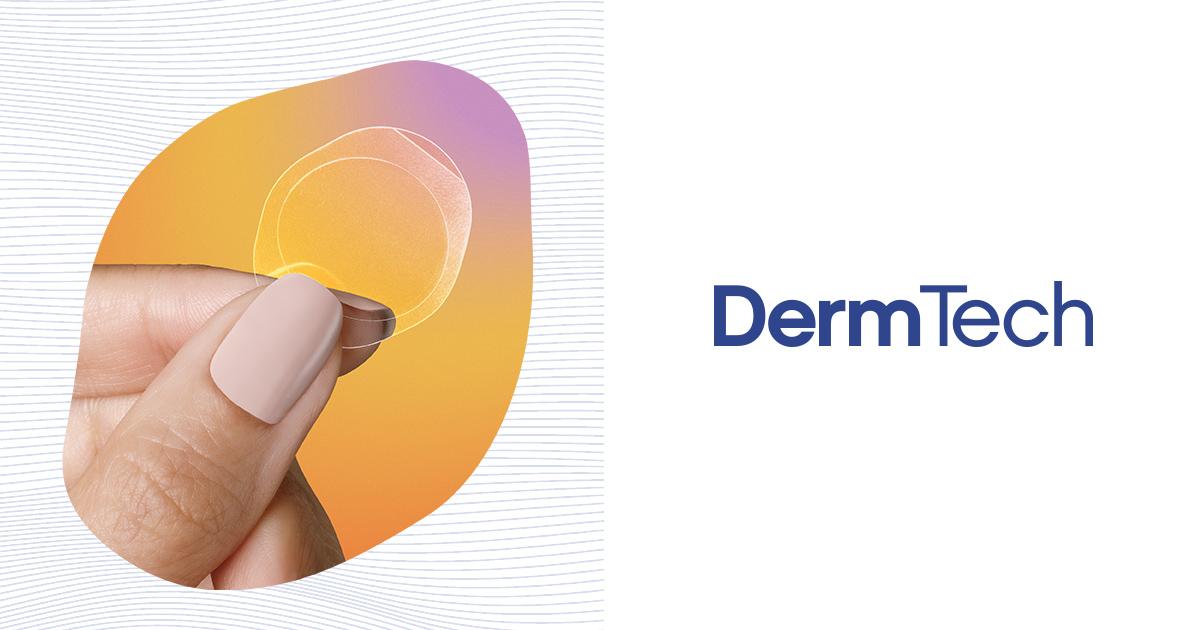
There are companies that come along with a genuinely exciting idea — something that makes you think, “okay, this could actually change things.” DermTech was one of those companies. A non-invasive skin cancer test that uses a sticker instead of a scalpel. No cutting. No scarring. Just a small adhesive patch that collects skin cells and sends them off to a lab for genomic analysis. On paper, it sounded like the future of dermatology.
So why has dermtech stock become one of the most cautionary tales in biotech investing over the last few years? That is what we are going to unpack here — the technology, the business story, the collapse, and what any of it means for people who are still watching dermtech stock closely.
What DermTech Actually Does
Before getting into the stock side of things, it helps to understand what DermTech built.
The company developed what they called the DermTech Melanoma Test — a diagnostic tool that uses Smart Stickers to lift cells from suspicious skin lesions without any kind of surgical procedure. Those cells get sent to DermTech’s lab in La Jolla, California, where scientists run genomic analysis to look for two specific gene markers — PRAME and LINC00518 — that are strongly associated with melanoma.
Traditional melanoma diagnosis requires a physical biopsy. A doctor cuts into the skin, removes a sample of tissue, and sends it to a pathologist. It is effective but invasive, uncomfortable, and leaves a scar. DermTech offered an alternative that was genuinely less than 1% likely to miss a melanoma, compared to the traditional biopsy pathway that misses early-stage melanoma up to 17% of the time.
That accuracy claim is not marketing fluff. It is backed by clinical data. And for patients anxious about a suspicious mole but reluctant to undergo a procedure, the appeal was obvious.
The technology was real. The problem, as it turned out, was the business.
The Hype Phase: When DermTech Stock Flew
If you had been watching dermtech stock in 2020 and 2021, you would have seen numbers that looked extraordinary. In early 2021, dermtech stock was trading above $50 per share. At its peak around mid-2021, it touched nearly $55. The market cap was significant. Investors were genuinely excited.
The reasons were understandable. The pandemic had accelerated telehealth adoption, and DermTech’s test was tailor-made for that environment. Dermatologists could order the test during a virtual visit, mail a collection kit to the patient, and get genomic results without the patient ever stepping into a clinic. It fit perfectly into where healthcare appeared to be heading.
On top of that, melanoma is not a small problem. It is one of the most common and most dangerous cancers in the world, and early detection genuinely saves lives. A company sitting at the intersection of genomics, non-invasive diagnostics, and telehealth had every reason to attract significant investor attention.
And it did.
The Reality Check
The trouble started when dermtech stock began to face a question every biotech company eventually has to answer: can you actually turn this into a sustainable business?
Revenue growth at DermTech was slower than the stock price suggested it should be. Getting insurance companies and payers to cover the test proved harder than expected. Many insurers were cautious about reimbursing a relatively new diagnostic tool when the traditional biopsy pathway — covered under existing codes — was already available.
Without widespread insurance coverage, patient access was limited. Without patient access, volume stayed low. Without volume, the company kept burning cash.
Operating losses mounted steadily. Quarter after quarter, DermTech reported widening losses as it spent on commercial infrastructure, sales teams, and laboratory operations while revenue failed to keep pace. Investors who had priced dermtech stock for a rapid commercialization story found themselves watching the opposite unfold.
The stock started sliding in late 2021. Then it kept sliding through 2022. Then further in 2023. Investors who had bought at the peak watched dermtech stock lose the vast majority of its value over a two-year period.
The Bankruptcy Filing
In June 2024, DermTech filed for Chapter 11 bankruptcy protection in the US Bankruptcy Court for the District of Delaware. For anyone still holding dermtech stock at that point, it was a devastating development — though not entirely surprising given the trajectory the company had been on.
Chapter 11 is a reorganization bankruptcy, not a liquidation. It gives a company time and legal protection to restructure its debts and try to keep the business running in some form. DermTech’s exclusivity period — the window during which only the company could propose a reorganization plan — was extended into mid-2025.
Following the bankruptcy filing, dermtech stock was removed from the NASDAQ Composite Index. The shares moved to over-the-counter trading, where the price had fallen to fractions of a cent. From a peak above $50, dermtech stock was eventually trading below $0.10. The decline was close to total.
DermTech 2.0: Is There Still a Company Here?
Here is where the story gets a little more complicated. Despite the bankruptcy and the collapse of dermtech stock as a traded security, the underlying technology did not disappear.
DermTech relaunched under the name DermTech 2.0 as part of its reorganization efforts. The company still operates its Gene Lab in La Jolla. The DermTech Melanoma Test is still being offered. The Smart Sticker technology still exists and still works. DermTech 2.0 also operates a service called DermTech Stratum, which provides biomarker testing services to pharmaceutical and research companies.
In other words, the science survived even when the stock did not.
Whether DermTech 2.0 can build a financially stable business on top of that science is still an open question. The core challenge — getting payers to consistently reimburse the test — remains. The commercial execution problems that sank the original company still need to be solved by the reorganized entity.
Lessons Dermtech Stock Teaches Investors
Looking at dermtech stock as a case study reveals a pattern that repeats itself in biotech investing more often than most people realize.
The technology was innovative. The science was sound. The clinical data was compelling. None of that was the problem.
The problem was the gap between a great idea and a functioning business. Getting a diagnostic test adopted in the US healthcare system requires navigating insurance coverage decisions, physician education, patient awareness, reimbursement rates, and competitive alternatives. All of that takes time and money — often far more of both than early investors anticipate.
DermTech was not a fraud. It was not a scam. It was a company with a legitimate product that could not scale commercially fast enough to survive. That happens. It happens a lot in biotech and healthtech. And it is a reminder that evaluating a company based on its technology alone — without equal attention to its commercialization path and financial runway — is a recipe for serious losses.
Dermtech stock was trading at valuations that assumed rapid commercial success. When that success proved slower than projected, there was nowhere for the stock to go but down.
What to Watch Going Forward
For investors who are still keeping an eye on dermtech stock or on DermTech 2.0, there are a few things worth tracking.
The reorganization outcome matters most. How DermTech emerges from bankruptcy — what the new capital structure looks like, who ends up owning the reorganized company, and what the plan for growth actually is — will determine whether there is any long-term value here for anyone.
Payer coverage decisions are the central business issue. If DermTech 2.0 can secure broader insurance reimbursement for the melanoma test, the underlying economics of the business change significantly. That has always been the key milestone the market was waiting for. It still is.
Partnerships with pharmaceutical or research companies through DermTech Stratum could provide revenue stability that the direct-to-physician model has struggled to deliver. That arm of the business bears watching.
For the trading stock itself — what remains of dermtech stock on OTC markets — it carries enormous risk. Stocks of companies in bankruptcy reorganization are notoriously unpredictable. Most of the time, existing shareholders are wiped out in reorganization as new equity is issued to creditors. Anyone considering touching dermtech stock at this stage needs to understand that they are not buying a recovering company — they are speculating on an outcome that may leave them with nothing.
Final Thoughts
DermTech’s story is genuinely sad in some ways. The melanoma test works. The technology is real. The clinical need is undeniable — melanoma kills people who might have been saved by earlier, more accurate detection.
But a good technology does not automatically become a good stock. Dermtech stock is a reminder that the distance between a brilliant idea and a profitable company is often far longer and far harder to travel than early investors assume.
The technology built by DermTech deserved to succeed. Whether DermTech 2.0 can make that happen remains to be seen. Until the picture becomes clearer — particularly around insurance coverage and the reorganization outcome — dermtech stock remains firmly in the high-risk, approach-with-extreme-caution category.
Watch closely. Move carefully. And never mistake a good idea for a guaranteed investment.
There is still a version of this story where dermtech stock — or whatever equity emerges from the reorganization — finds its footing and builds something lasting. The science gives it a real shot. But that shot is far from guaranteed, and the history of dermtech stock so far demands that any optimism be grounded in hard evidence rather than hope alone.