

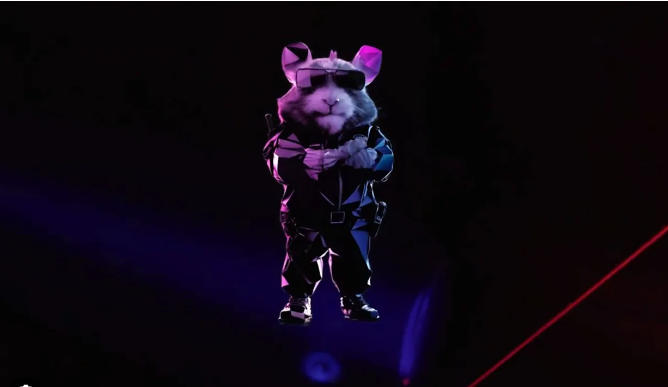
There are tweets, and then there are Elon Musk tweets. Most of the time, you can tell the difference within seconds — not just because of who sent them, but because of what happens next. Markets move. Memes spread. Entire Reddit threads spin up within the hour. But even by Musk’s standards, the moment he brought hamster fight club into the conversation was something genuinely different. It was funny, it was absurd, it pointed at something real, and it had consequences that nobody predicted.
This article covers the full story — where the hamster fight club Elon Musk moment came from, what it actually said about government spending, how the internet reacted, and why it ended up mattering to the crypto market in ways that still make sense when you think about how meme culture and money have become permanently intertwined.
Where Did “Hamster Fight Club” Come From?
To understand the hamster fight club Elon Musk story, you have to go back to a government spending report that sounds like it was written as a joke but was, in fact, completely real.
A U.S. government study costing over $3 million was allocated to research involving hamsters on steroids — specifically studying their fighting behavior. The study was designed to understand aggression patterns under the influence of anabolic steroids, which has some legitimate scientific framing behind it. But when you strip that framing away and read the headline — millions of taxpayer dollars funding hamsters fighting each other — it lands very differently.
Senator Rand Paul, who has built a reputation for highlighting what he considers wasteful government expenditure, posted about this study. And then Elon Musk, who at that point was running DOGE — the Department of Government Efficiency — and was actively looking for examples of absurd federal spending to make his case, responded.
His take on the hamster fight club Elon Musk moment was exactly what you would expect: dry, sardonic, and delivered in a way that made it spread faster than any press release ever could. The post got over 125,000 likes and nearly 25,000 reposts. Within hours, the hamster fight club was everywhere.
Why This Moment Hit Different
Musk has highlighted wasteful spending before. That is not new. What made the hamster fight club Elon Musk post particularly effective was its absurdity-to-reality ratio.
Most government waste stories are complicated. They involve contractors, procurement rules, multi-year budget cycles, and definitions of “waste” that people can reasonably argue about. The hamster fight club was not like that. It required almost no explanation. You read it, you pictured it, and you either laughed or got angry — or both. That simplicity is what made it so shareable.
It also fit perfectly into the broader meme culture that Musk operates within. His entire communication style on X is built around internet humor, provocative short takes, and references that his audience gets immediately. Hamsters fighting each other on steroids is, by any measure, premium meme material. And Musk clearly understood that.
The timing mattered too. DOGE was actively making news. People were paying attention to every example of government spending that came out of that operation. Dropping something as visually ridiculous as the hamster fight club into that conversation gave people something to laugh at while making a serious political point — which is a very effective combination.
The Internet’s Reaction
Once the hamster fight club Elon Musk post went viral, the internet did what it does best: it ran with the concept in every possible direction at once.
Meme accounts immediately created graphics of tiny hamsters in boxing rings. People started posting videos of actual hamsters being dramatic. The phrase itself became a shorthand for government waste — “at least it’s not the hamster fight club” started appearing as a comparison point in arguments about budget cuts.
Political commentators used it as an example of how Musk and DOGE were approaching their mandate. Supporters said it proved the point that the federal government funds ridiculous things. Critics pointed out that the research had scientific context and that cherry-picking examples like this misrepresents how research funding works. Both arguments ran in parallel, which is also very typical of how Musk-generated controversy tends to play out.
The hamster fight club Elon Musk post became a reference point that kept coming up in political conversations for weeks after. Late-night commentary picked it up. Tech journalists wrote explainers. And somewhere in the middle of all of this, the crypto market noticed.
What Happened to Crypto After the Hamster Fight Club Moment
This is where the hamster fight club Elon Musk story takes a turn that tells you something real about how the market works in 2024 and 2025.
Musk’s posts have a documented history of moving crypto prices. Dogecoin is the most famous example — his tweets about it have caused dramatic price swings on multiple occasions over the years. The market has essentially priced in the possibility that anything Musk posts that touches on a particular coin or theme will cause movement.
When the hamster fight club post went viral, crypto traders started paying attention to hamster-themed tokens. Sad Hamster, a memecoin trading under the ticker HAMMY, surged by nearly 50% within 24 hours of the post gaining traction. At its peak, HAMMY hit around $0.05 before pulling back. Trading volume exploded. The coin had been relatively obscure before the moment — suddenly it was being discussed across crypto Twitter and trading forums.
The hamster fight club Elon Musk effect on HAMMY is not unique to hamsters. It is a pattern that repeats every time Musk says something that touches on an animal, a concept, or a symbol that has a corresponding token. The market has learned to watch his posts for these signals, intentional or not. The hamster fight club Elon Musk moment was not designed to pump HAMMY — Musk was talking about government spending — but the market connected the dots anyway and acted on it.
The Tesla Berlin Hamster Club Connection
There is a second thread to the hamster fight club Elon Musk story that is worth understanding, because it shows how the hamster theme has shown up in multiple places connected to Musk.
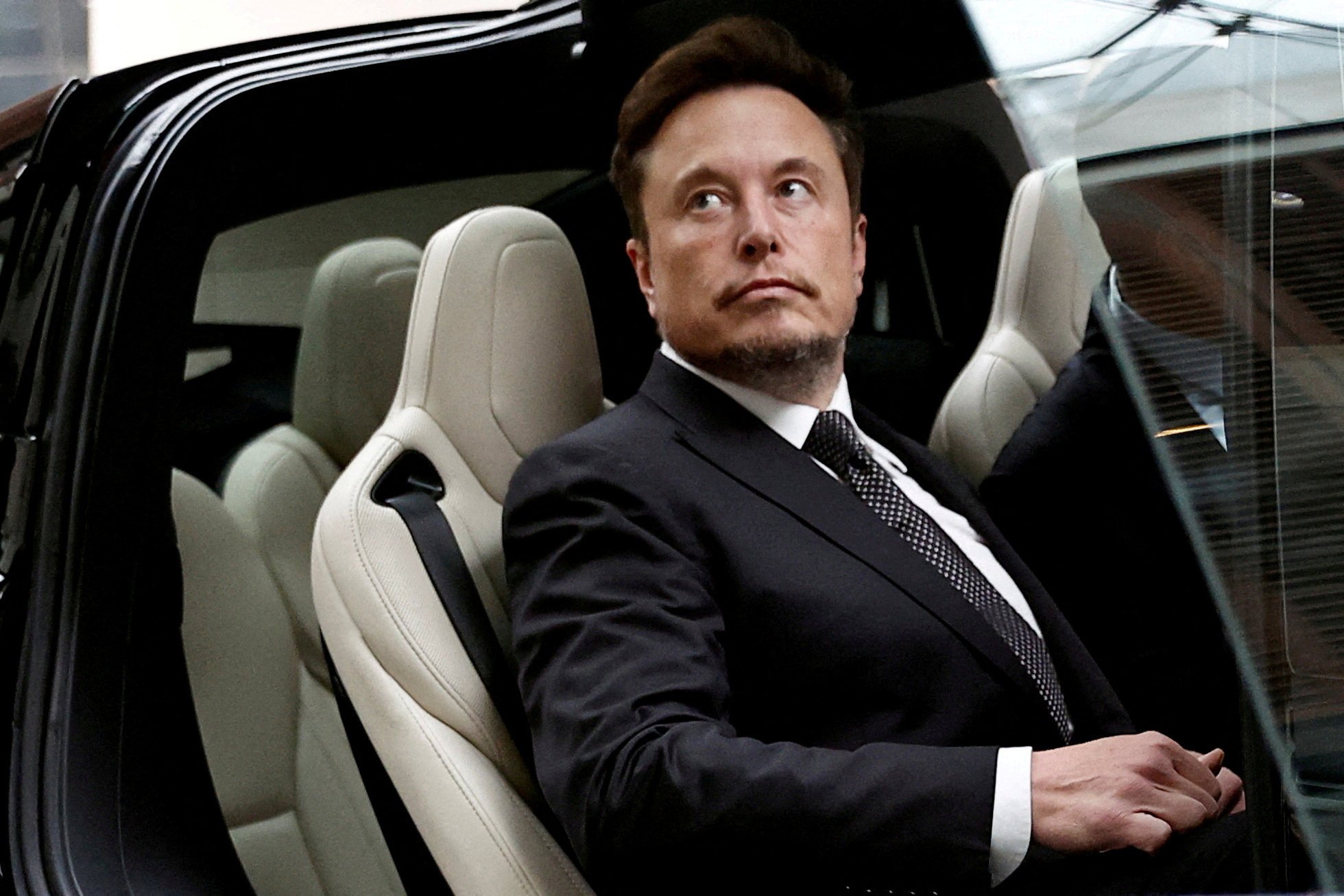
Around the same time that DOGE was making news, Tesla’s Gigafactory in Grünheide, near Berlin, was making headlines for a different reason. Musk and the factory’s plant director Andre Thierig unveiled what they called the Hamster Club — officially the Giga Berlin Rave Cave. It is a fully operational nightclub built into the basement of the Tesla factory, open to employees.
The venue has DJs, laser systems, disco balls, and serious bass speakers. Videos shared by Tesla showed employees in hamster-branded t-shirts walking into the space. Thierig’s tweet announcing it — “Giga Berlin rave cave now alive! Party on” — got significant attention from people who found the whole concept either brilliant or baffling.
The hamster fight club Elon Musk connection to Berlin is interesting. The Berlin Hamster Club taps into something real about Berlin’s identity. The city is globally famous for its club culture, and Musk had previously tried to get into Berghain — one of the most exclusive clubs in the world — when he was in the city celebrating the factory opening. He was reportedly turned away, though he later claimed he chose not to enter. Building his own club inside a factory was, in that context, very on-brand.
The connection between the Berlin Hamster Club and the hamster fight club Elon Musk tweet is not direct — they are separate moments. But together they form a pattern: hamsters have become an unlikely recurring motif in the Musk universe, and every time one of these moments surfaces, it generates attention that reaches well beyond the original context.
What This Tells Us About Meme Culture and Power in 2025
The hamster fight club Elon Musk episode is a useful case study in how information, humor, and influence work in the current moment.
Musk is not just a businessman or a government official or a social media personality. He is all of those things simultaneously, and the combination means that a single post from him can function as political commentary, market signal, cultural moment, and meme all at once. The hamster fight club moment did all four of those things without Musk apparently trying to do more than make a point about spending.
That kind of reach is genuinely unprecedented. Politicians do not move markets with jokes. Entertainers do not shape government policy debates. But Musk occupies a space where both of those things happen, and the hamster fight club moment is a clean example of how that works in practice.
Whether you think that is a good thing or a troubling thing depends a lot on your broader views of Musk and the institutions he is operating within. But setting aside the politics, the mechanics of the moment — absurd fact, perfectly timed post, massive engagement, downstream market effect — are worth understanding for anyone trying to make sense of how influence actually moves in 2025.
Final Thoughts
The hamster fight club Elon Musk story started with a real government expenditure that was easy to mock, turned into one of the more memorable viral moments connected to the DOGE operation, spilled over into the crypto market in ways that boosted a memecoin by 50%, and runs in parallel with a literal hamster-branded nightclub inside a Tesla factory.
None of that was predictable. All of it made sense in retrospect. That combination — unpredictable in advance, logical in hindsight — is probably the most accurate description of how Elon Musk operates online, and why the hamster fight club moment landed the way it did.
In a world where a tweet about fighting hamsters can move markets, fund debates, and generate thousands of memes within a single news cycle, understanding how these moments work is not optional. It is just how things are now.