
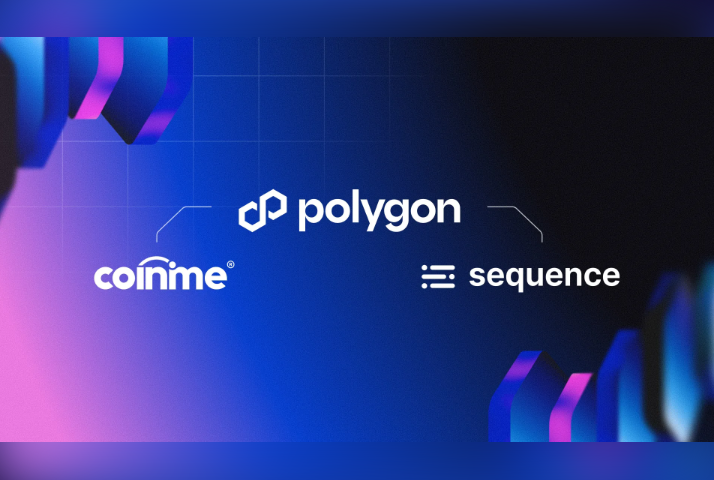
There are moments in crypto where you read a headline and think — okay, this one is different. This is not just another partnership announcement or a rebranding exercise. This actually means something. When news broke that polygon acquires coinme and sequence in a deal worth over $250 million, that was one of those moments for me.
I have been watching the blockchain payments space for a while now. And the honest truth is that for all the talk about crypto changing the world, actually moving money between traditional banking systems and blockchain rails has always been a nightmare. Fragmented. Slow. Confusing. Full of regulatory grey areas that make institutions nervous. This deal is Polygon’s answer to all of that — and it is a pretty serious answer.
Let me walk you through what actually happened, what Coinme and Sequence bring to the table, and why this matters not just for Polygon but for where crypto payments are heading in general.
What Actually Happened — The Deal in Simple Terms
On January 13, 2026, Polygon Labs announced it had signed definitive agreements to acquire both Coinme and Sequence for a combined total of more than $250 million. That is a significant number. Not eye-watering by big tech standards, but in the blockchain infrastructure world it signals serious intent.
The Sequence part of the deal was expected to close quickly — within the same month as the announcement. The Coinme acquisition is expected to close in the second quarter of 2026, pending regulatory approvals. Once done, Coinme will operate as a wholly owned subsidiary of Polygon Labs.
So why these two companies specifically? That is the real question. And once you understand what each of them actually does, the logic behind polygon acquires coinme and sequence becomes very clear.
What Is Coinme and Why Did Polygon Want It?
Coinme was founded back in 2014 — which in crypto years makes it practically ancient. It was one of the first licensed digital currency exchanges in the United States. But what really makes it valuable is not its history. It is its licenses.
Coinme holds money transmitter licenses that allow it to operate legally across 48 US states. That is extraordinarily difficult to obtain and even harder to maintain. For any company trying to build a compliant payments business in America, those licenses are worth their weight in gold. They represent years of legal work, regulatory relationships, and compliance infrastructure that you simply cannot shortcut your way into.
Coinme also operates cash-to-crypto services — including a network of crypto ATMs where people can convert physical cash into digital assets. This gives Polygon something it never had before — a real-world, physical touchpoint between everyday people and the blockchain. When polygon acquires coinme and sequence, it is not just buying technology. It is buying regulated access to US payment rails and a direct line to millions of people who use cash.
It is worth being honest about one thing here too. Coinme had a rough patch with regulators in 2025. California and Washington both targeted the company over violations related to ATM withdrawal limits. Washington later agreed to stay its cease-and-desist order, and by the end of December 2025, Coinme had reached an agreement to resume full operations there. Polygon CEO Marc Boiron addressed this directly, saying he believed Coinme’s compliance practices actually go beyond what regulations require. That is a confident position to take — and one Polygon is clearly prepared to stand behind.
What Is Sequence and What Does It Add?
While Coinme handles the cash and fiat side of things, Sequence fills a completely different gap. Sequence is a wallet infrastructure and cross-chain orchestration company based in Toronto. It builds enterprise smart wallets and a routing engine that allows assets to move across different blockchains with minimal friction.
If Coinme is the on-ramp — the way you get real money into the crypto world — then Sequence is the highway system that makes sure it gets where it needs to go efficiently once it is there. When polygon acquires coinme and sequence together, it is assembling all three pieces of a complete payments system: get money in, move it across chains, get it out again.
Sequence already has serious credibility in the industry. It works across major networks including Polygon, Immutable, and Arbitrum. It has a distribution partnership with Google Cloud. These are not small details. They signal that Sequence is already embedded in real infrastructure that real companies depend on.
The Open Money Stack — Polygon’s Bigger Vision
To understand why polygon acquires coinme and sequence makes strategic sense, you have to understand what Polygon is actually trying to build. The company has a concept it calls the Open Money Stack. Think of it as a complete, integrated system for moving money anywhere in the world — instantly, reliably, and on blockchain rails — without anyone needing to understand the technical complexity underneath.
The idea is to bundle together blockchain settlement, wallet infrastructure, and fiat access into a single clean experience. Developers building payment applications would not need to stitch together five different services from five different providers. Everything they need would be in one place.
Marc Boiron, the CEO of Polygon Labs, put it plainly. Stablecoins are increasingly being used as a settlement layer for global payments. But the infrastructure around them is fragmented. These acquisitions, he said, give Polygon regulated access to US payment rails, wallet infrastructure, and cross-chain capabilities to build an open payments business on top of onchain settlement.
The Open Money Stack is expected to launch sometime in 2026 and is designed to work across multiple blockchains — not just Polygon’s own chain. That last part is important. Boiron has been clear that payments are too big for any single chain to handle alone.
Why This Deal Matters Beyond Polygon
The story of polygon acquires coinme and sequence is interesting on its own. But it also reflects something bigger happening in the crypto industry right now.
Stablecoins have been gaining serious momentum. The passage of the US GENIUS Act in 2025 established a federal framework for payment stablecoins — something the industry had been waiting years for. With regulatory clarity finally arriving, the race to build compliant stablecoin payment infrastructure has accelerated dramatically.
Polygon is not the only company moving in this direction. Stripe, which acquired a stablecoin platform of its own, is also building in this space. Traditional banks are exploring onchain settlement. The lines between crypto infrastructure companies and payment companies are blurring fast.
What polygon acquires coinme and sequence does is position Polygon as a serious contender in that space — not just as a blockchain network but as a full-stack payments business with regulated infrastructure, wallet technology, and cross-chain capability all under one roof. The combined businesses have already processed over $1 billion in offchain sales and more than $2 trillion in onchain value transfers. Those are not theoretical numbers. They are proof that the infrastructure works at scale.
What Does This Mean for POL Token Holders?
If you hold POL — Polygon’s native token — you are probably wondering what this means for you. The answer is that as payment activity scales on the Polygon network, the chain captures more value through higher onchain throughput and increased network fees. That directly benefits stakers and validators.
The more transactions that flow through Polygon’s infrastructure — whether from Coinme users converting cash, Sequence-powered wallets routing cross-chain payments, or developers building on the Open Money Stack — the more activity hits the Polygon chain. More activity means more fees. More fees mean more value flowing to those who secure and stake the network.
At the close of 2025, Polygon’s onchain stablecoin supply had already reached approximately $3.3 billion. That number is set to grow significantly as the integrations from polygon acquires coinme and sequence begin to take effect.
Final Thoughts
When polygon acquires coinme and sequence, it is making a very deliberate bet. The bet is that the future of payments is onchain, that stablecoins will be at the center of it, and that the companies which own the regulated infrastructure connecting traditional money to blockchain rails will be the ones that win.
It is a logical bet. And the pieces Polygon has assembled — Coinme’s licenses and fiat access, Sequence’s wallet and cross-chain technology, and Polygon’s own chain and Agglayer aggregation protocol — fit together in a way that genuinely covers the full payments stack.
Whether Polygon pulls it off depends on execution. Regulation is unpredictable. Integration is hard. Competition from Stripe, banks, and other blockchain networks is real. But the ambition behind polygon acquires coinme and sequence is clear, the infrastructure is credible, and the timing — right as stablecoin regulation is finally maturing in the US — could not be better chosen.
This is one to watch closely. The crypto payments space is moving fast, and Polygon just made sure it has a seat at the table.