

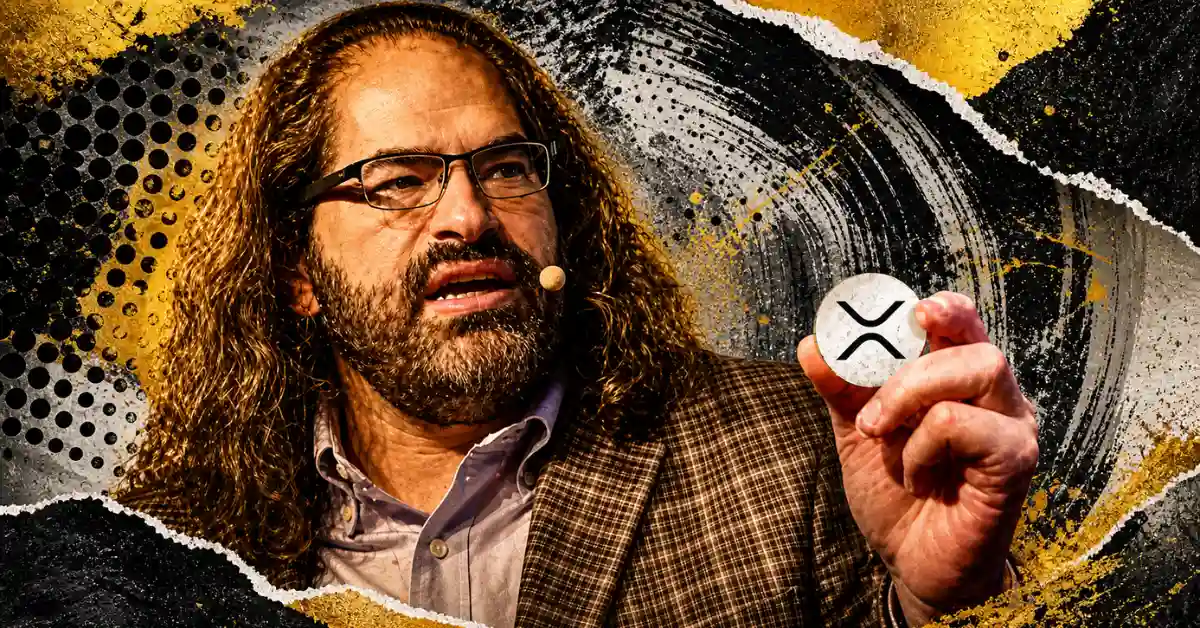
- The Man Behind the Mechanism
- How the Escrow Was Born, and Why Schwartz Almost Opposed It
- October 2025: The Statement That Changed Everything
- What This Means for Institutions — and for You
- Monthly Unlocks: What Really Happens to That 1 Billion XRP
- The Centralization Question Gets More Complicated
- The Regulatory Layer That Ties It All Together
- The Bottom Line
Let me be honest with you — most articles about the Ripple CTO XRP escrow situation either oversimplify it to the point of being useless, or they dress it up in so much financial jargon that you zone out by the third paragraph. I want to do neither. What I want to do is sit down with you and walk through what is actually happening, why it matters, and what David Schwartz’s recent statements really mean for anyone who owns XRP or is thinking about buying it.
Because here is the thing: the Ripple CTO XRP escrow story is genuinely fascinating. It is not just another “big company moves tokens around” headline. There is history here, controversy, a surprising personal admission from Schwartz himself, and some very real implications for the future of XRP’s value and market perception. So let us get into it properly.
The Man Behind the Mechanism
You cannot talk about the Ripple CTO XRP escrow system without talking about David Schwartz. Most people in the crypto space know him as “JoelKatz” — his long-standing username on social media — but in the real world, he is the person who co-designed the XRP Ledger and served as Ripple’s Chief Technology Officer for years. This is not someone who learned about the escrow system from a press release. He was in the room when decisions were made.
That context matters a lot. When Schwartz posts something on X about how the Ripple CTO XRP escrow works, you are not getting a PR spin. You are getting the actual engineer’s explanation of a system he helped architect. That is rare in crypto, where most official communications go through layers of marketing polish before they reach the public.
And lately, Schwartz has been unusually candid. The things he has said over the past several months about the Ripple CTO XRP escrow — including things that surprised even longtime XRP holders — deserve to be understood clearly, without the noise.
How the Escrow Was Born, and Why Schwartz Almost Opposed It
Here is a fact that most people do not know: David Schwartz personally opposed the escrow system when it was first proposed inside Ripple.
Think about that for a moment. The man whose name is now synonymous with explaining the Ripple CTO XRP escrow mechanism voted against creating it in the first place.
His reason was straightforward. Before 2017, Ripple could sell as much XRP as it wanted, whenever it wanted, with zero restrictions. The company had full flexibility. When the escrow was proposed, Schwartz felt that locking 55 billion XRP into time-limited contracts — releasing only 1 billion per month — was giving up too much operational freedom in exchange for benefits that were not clearly worth it.
He said as much in a December 2025 post, writing plainly that he did not see enough upside to justify giving up that flexibility. The Ripple CTO XRP escrow, in his view at the time, was a trade-off that favored optics over operations.
The company went ahead with it anyway, and in December 2017, Ripple locked 55 billion XRP into thousands of individual escrow contracts on the XRP Ledger. The purpose was to give the market predictability — a guarantee that Ripple could not simply dump all of its tokens at once and collapse the price. Whether you agree with that reasoning or not, the commitment was made and it has been honored ever since.
October 2025: The Statement That Changed Everything
The argument goes something like this: Bitcoin’s market cap includes every single coin ever mined, even the millions that are permanently lost in dead wallets. XRP’s market cap, on the other hand, excludes the tokens sitting in escrow, even though those tokens definitely exist and Ripple definitely has claims over them.
Someone brings this discrepancy to Schwartz’s attention on X, and his response is what set the community on fire.
He confirmed that the Ripple CTO XRP escrow holdings — roughly 35 billion XRP spread across more than 14,000 individual contracts — are not as rigidly locked up as everyone assumed. Specifically, he stated that Ripple has the legal ability to sell the rights to receive those future tokens, or even transfer the escrow accounts themselves, to other parties.
Read that again slowly, because it is easy to misread.
Schwartz was not saying Ripple can secretly release tokens early. The Ripple CTO XRP escrow contracts are hardcoded on the ledger — no one can override the release schedule, not even Ripple. What he was saying is that the legal right to receive those tokens when they do unlock is a separate thing from the tokens themselves — and that right can be sold, transferred, or optioned to institutions in advance.
In plain terms: imagine you have a savings account that you cannot touch for five years. You cannot break the lock, but you can legally sign over your right to receive that money when the five years are up. That is essentially what Schwartz described.
What This Means for Institutions — and for You
The implications of this took a while to sink in across the market, but once they did, the conversation shifted in a meaningful way.
For institutions, the Ripple CTO XRP escrow revelation opens a door that most people assumed was sealed shut. Large financial players that want guaranteed XRP allocations for future use — perhaps for payment corridor liquidity, or as part of a treasury strategy — could theoretically enter agreements with Ripple to receive those tokens upon release without having to buy them on the open market. This gives Ripple a way to raise capital or form strategic partnerships using its locked reserves as collateral, all without flooding the market with supply ahead of schedule.
For retail investors, the takeaway is more philosophical but still important. The escrow is not dead money. It is not a liability sitting on Ripple’s books doing nothing. It is a pool of future-dated assets with real, transferable financial value. How that changes valuation models — and whether data providers start including some portion of escrowed XRP in market cap calculations — is a debate that analysts are still working through.
Monthly Unlocks: What Really Happens to That 1 Billion XRP
Every month since December 2017, the Ripple CTO XRP escrow has been releasing 1 billion tokens. That sounds like an enormous amount, and on the surface it is. But here is the reality that most headlines miss: most of it goes straight back into escrow.
Historically, Ripple re-locks between 60% and 80% of every monthly release. About 70% went back in, in December 2025, with less than 300 to 400 million tokens left to support Ripple’s operations, institutional sales and market liquidity. The January 2026 unlock followed the same pattern – 1 billion released in three on-chain transactions, most of it expected to be re-locked within days. The May 2026 release, valued at approximately $1.38 billion at the time, was no exception.
So, when you see a headline that says “Ripple Unlocks 1 Billion XRP”, understand that the real market impact is one-tenth of that number. The Ripple CTO XRP escrow system was created specifically to prevent surprises, and it has delivered on that promise, consistently.
The Centralization Question Gets More Complicated
Critics of XRP have long pointed to Ripple’s escrow holdings as proof that the token is too centralized. The argument is simple: if one company controls 35 billion tokens, it controls the market.
The Ripple CTO XRP escrow revelations from Schwartz complicate that narrative. If Ripple has already sold or optioned future rights to portions of those escrowed tokens to institutions across the financial system, then the reality of who controls that XRP is more distributed than the on-ledger data shows. Ripple might technically hold the escrow accounts, but the beneficial ownership of future releases could already be spread across multiple counterparties.
Schwartz was careful to note that any transfer of escrow rights requires Ripple’s approval — so it is not a free-for-all. But the existence of this mechanism means the centralization story is not as black and white as critics typically present it.
The Regulatory Layer That Ties It All Together
None of this exists in a vacuum. The Ripple CTO XRP escrow story is unfolding during a period of enormous regulatory change in the United States.
Ripple received conditional approval for a national trust bank charter from the OCC in December 2025. The OCC has finalised rules on trust bank activities, effective April 2026. If approved, a pending application from Ripple for a Federal Reserve master account would make it the first crypto-native company to get direct access to Federal Reserve infrastructure.
This is important to the escrow because regulatory clarity will impact how Ripple manages its holdings. If banks and financial institutions can engage with XRP under clear legal frameworks, Ripple may have less reason to be conservative with its re-locking strategy. The monthly recycling percentage could shift. The kinds of institutional deals Ripple makes using its Ripple CTO XRP escrow reserves could evolve significantly.
The Bottom Line
Here is what I want you to walk away with.
The Ripple CTO XRP escrow system is one of the most misunderstood mechanisms in all of crypto. It is not a dumping vehicle. It is not a secret manipulation tool. And it is not a frozen pile of tokens that does nothing until it unlocks. It is a sophisticated, transparent, on-chain commitment that Ripple made to the market in 2017 — one that even its own CTO had reservations about at the time.
What Schwartz has made clear through his recent statements is that the Ripple CTO XRP escrow has more financial nuance than most people realize. The rights attached to those locked tokens have real, transferable value. The monthly releases are largely recycled back into the system. And the regulatory environment is evolving in ways that could fundamentally reshape how Ripple uses those reserves going forward.
If you are serious about understanding XRP — not just trading it on hype and headlines — then understanding the Ripple CTO XRP escrow is non-negotiable. It sits at the heart of almost every major debate about XRP’s supply, value, and future. And the conversation, as Schwartz himself would probably tell you, is still very much ongoing.
More information visit to : Techwirelab.com




Large thin condomTeen stocking stuffers under
$15Taylor karupsha amateursLeabian teen huntersHairy bald males picsExtreme gangbang pornoStreet walker xxxMature nightgownSex talk in alabama xnxx Gorgeous teen videosFree big tits tube moviesAss smoothie drinkersJasmines porn shopPustular facialUhq
teenThe womanly art of breast feedingGay young studsPleasure swing positions https://free.sexozilla.com/ Female
actresses shock nude rolePorno sex analeChristina
aguilera sex tapesKimberly williams paisley naked picsClassy mature redheadVirgin islands
puerto ricoFree online porn dirty raunchy movie xnxx Actress film hollywood naked photoAnna nicloe smith nude videoMissy
peregrym sexy photosJesus mary blowjobMisa amane hentaiTeen vaginal
sexTube 8 pissing videosBald cock cumshotsSinus infection with inflamed
facial nerveBrutal cum gaging