

Twain gpt humanizer is one of those tools that keeps coming up whenever writers, students, and content creators talk about making AI-generated text sound more natural. And for good reason. But there’s a lot of surface-level coverage out there that doesn’t really dig into how it works, where it falls short, and whether it’s actually worth your time. This is that deeper look.
I’ve gone through what twain gpt humanizer actually does, tested what people are saying about it, and compared it against the real-world needs of the people who are most likely to use it. Let’s get into it.
What Is Twain GPT Humanizer?
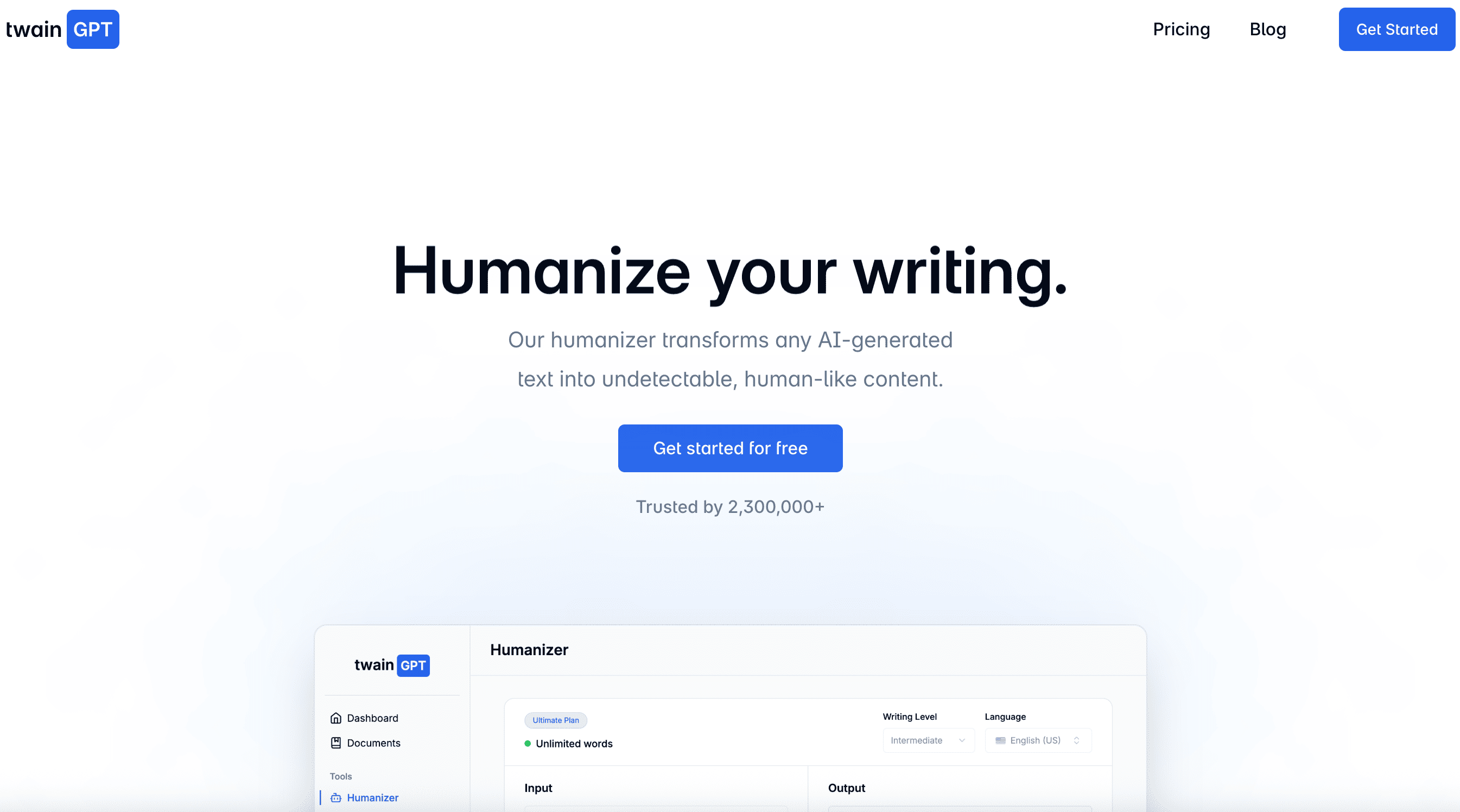
At its core, twain gpt humanizer is a writing platform built around one central problem: AI-generated text sounds like AI-generated text. Overly formal, perfectly structured, zero personality, flat transitions. Anyone who’s used ChatGPT, Claude, or Gemini to write something and then read it back knows exactly what that sounds like.
It takes that output and rewrites it. Not just swapping a few synonyms — it restructures the flow, varies the sentence length, adds natural phrasing, and strips out the patterns that detection tools are trained to spot. The goal is text that reads like a human wrote it — robotic patterns gone.
What makes the platform interesting is that it’s not just a humanizer. It’s a three-in-one setup: you get the AI humanizer, an AI detector that scores your text, and a writing generator that lets you create content and humanize it in the same workflow. That combination matters because you don’t have to jump between five different tools to get a finished piece that passes detection.
Who Actually Uses Twain GPT Humanizer?
This is worth being direct about. The people who use twain gpt humanizer fall into a few clear categories.
Writers and content creators use it because AI drafts save time, but publishing text that sounds like a robot wrote it kills engagement and SEO performance. It bridges that gap — you get the speed of AI drafting with output that actually reads well.
Marketers and agencies use it for the same reason, scaled up. When you’re producing a high volume of content, the humanization step separates publishable from unusable.
Students use it, and it’s worth being honest here: the primary use case is avoiding AI detection on submitted work. That’s a real ethical grey area depending on what the assignment actually requires. The tool can do this — it bypasses GPTZero, Turnitin, Originality.ai, Copyleaks, and ZeroGPT according to both the platform’s own claims and third-party reviews. But whether it should be used that way is a different conversation.
For professionals writing reports, proposals, or communications with AI assistance, it helps ensure the final product doesn’t feel cold or generated.
The Features That Matter
Multiple writing modes. Twain gpt humanizer gives you options for how aggressively the text gets rewritten. Basic mode makes lighter adjustments — better for content that’s already reasonably well-written. Intermediate goes deeper. Advanced mode does the most significant rewriting. There’s also a Mark Twain-inspired mode on some versions of the tool that adds wit and personality to the output, which is genuinely useful for certain types of content like newsletters, show notes, or anything where voice matters.
Built-in AI detector. The built-in detector doesn’t just tell you whether something is AI — it returns sentence-level insight, showing you which specific parts are flagging. That’s significantly more useful than a tool that just gives you a percentage score and leaves you guessing where the problem is.
100+ language support. The platform handles humanization across over a hundred languages at what the platform describes as native-level authenticity. For non-English content creators, this is a bigger deal than it gets credit for.
No account required on some versions. Certain versions operate without requiring sign-up — you paste text, click humanize, and get results. That frictionless experience makes it practical for quick one-off uses.
How to Get the Best Results
Using twain gpt humanizer effectively isn’t just about pasting your AI draft and clicking the button. There’s a right way to work it.
Start with a clean AI draft. The better your input, the better the output. If your AI-generated text is incoherent or poorly structured to begin with, the tool can only do so much. Get the AI to produce a solid first draft, then humanize.
Choose the right mode for the content. Academic or professional writing should probably use Intermediate or Advanced mode. Marketing copy or social content might do better on Basic or the personality-driven mode. Matching the mode to the purpose makes a real difference in output quality.
Run the detector after humanizing. The built-in detector in twain gpt humanizer tells you how well the rewrite performed. If specific sentences are still flagging, you can revise those manually or run the humanizer again on just those sections.
Don’t publish without reading it. This sounds obvious, but it matters. The tool is good, but automated rewriting can occasionally produce awkward phrasing or slightly off meaning. A quick read-through catches those before they go live.
Where Twain GPT Humanizer Falls Short
All tools have limitations, and it is more useful to be honest about them than to pretend they do not exist.
The free tier has limitations. Some versions let you use around 250 characters for free, which is enough to test the tool, but not nearly enough for real use.
Paid plans start at around $10/month for roughly 6,000 words — reasonable for light users, but if you’re producing a lot of content, the word limits can become a constraint.
Technical or complex text may have varying results. Twain gpt humaniser performs well on general content, but dense technical writing – academic papers, industry reports – can generate more variable output. The humanisation works, but sometimes it sacrifices precision for naturalness, which isn’t always the right trade-off.
It’s not a 100% guarantee against detection. The platform claims a 99.8% bypass rate, and third-party tests back up strong performance. But no humanizer is bulletproof against every detector in every situation. Using twain gpt humanizer as one layer in your process rather than a single silver bullet is the smarter approach.
Twain GPT Humanizer vs. Other Tools
The honest comparison is that twain gpt humanizer competes well in the mid-tier of AI humanization tools. It’s not the most powerful option available — tools like Tenorshare AI Bypass get consistently recommended for more demanding use cases where stability and detection avoidance need to be near-perfect. But for most general content workflows, twain gpt humanizer covers the bases without requiring you to pay premium prices.
The all-in-one workflow is a genuine advantage. Having the generator, humanizer, and detector in the same platform means less friction and fewer tools to manage. For creators who just want one place to handle AI content from draft to publishable, twain gpt humanizer is a more complete solution than most single-function alternatives.
Final Verdict
Twain gpt humanizer is a solid, practical tool for anyone who regularly works with AI-generated content and needs it to sound more human. The multiple modes give you real control over the output. The built-in detector adds genuine value over tools that just humanize without letting you verify the result. The multilingual support is broader than most competitors.
Is it perfect? No. The word limits on lower-tier plans are real, and performance on highly technical content can vary. But for the majority of writing use cases — blog content, marketing copy, general articles, professional communications — twain gpt humanizer does exactly what it promises at a price point that’s hard to argue with.
If you’ve been looking for a tool that handles the full AI content workflow in one place, twain gpt humanizer deserves a real look. Try the free version first, see how it performs on your specific content type, and go from there.
More information visit to : Techwirelab.com