
- How Did Kynship Get Here?
- Here’s Where the AI Actually Comes In
- Finding the Right Influencers, Fast
- Reaching Out to Hundreds of Influencers Without Sounding Like a Bot
- ChatGPT in the Mix
- Turning Influencer Content Into Paid Ads
- What Makes This Different From Every Other Agency
- Who Actually Benefits From Kynship AI?
- Where Is All This Going?
- Wrapping It Up
Honestly, if you’ve been Googling what is Kynship AI for a while and keep getting vague answers, I get it. There’s a lot of noise out there.So, I’ll get straight to it and do this properly, with no fluff and no corporate speak. Just an honest breakdown of what Kynship is, what they’re doing with AI and why it actually matters for brands right now.
Let’s go.
What is Kynship AI, anyway?
Here’s the short version: Kynship is an influencer marketing company. But this isn’t your run-of-the-mill agency that simply matches brands with celebrity influencers and calls it good.
. When you hear the phrase what is Kynship AI, it refers to how Kynship has woven artificial intelligence into almost every part of how they run influencer campaigns — from finding creators, to reaching out to them, to running paid ads with the content they generate.
They’re not just talking about AI either. They’re actually using it day to day. And that’s a pretty big deal in an industry that’s been slow to modernize.
The agency was built on a really interesting belief — that influencer marketing only works when it’s genuine. Not scripted. Not transactional. Actually genuine. And now they’re using AI to scale that genuineness, which sounds like a contradiction but actually makes a lot of sense once you understand how they do it.
How Did Kynship Get Here?
You can’t really understand what is Kynship AI without knowing a bit about where Kynship came from.
The founders looked at the influencer marketing world and saw a massive problem. Brands were spending huge amounts of money on influencer deals, handing over long scripts, demanding specific talking points, and then wondering why the content felt hollow and didn’t convert. The influencers weren’t excited. The audience could tell. And brands were burning cash with nothing to show for it.
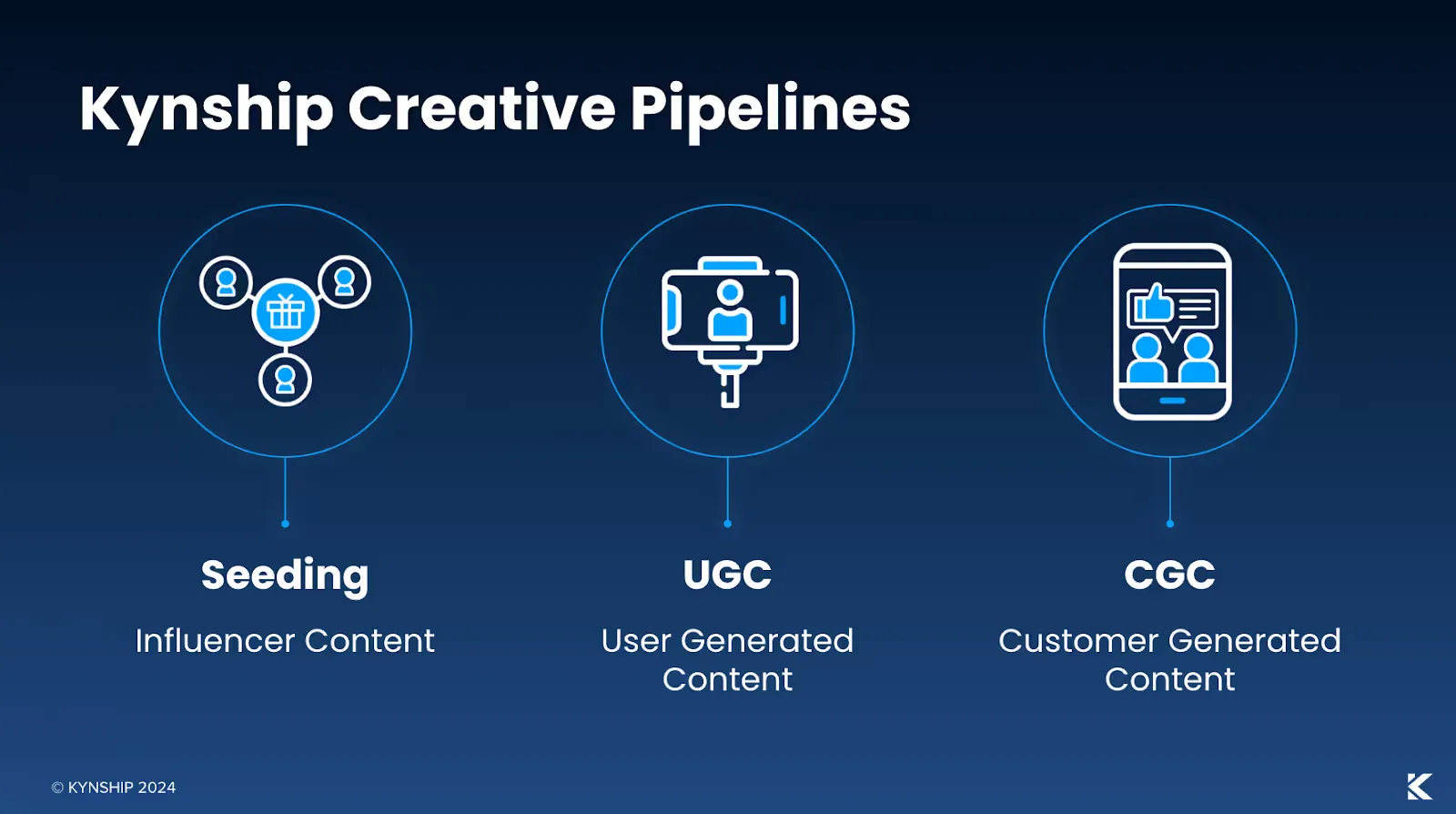
Kynship flipped the whole model. Instead of paying influencers to say nice things, they started sending products for free — no strings attached. If an influencer loved the product, they’d post about it naturally. That kind of content? It performs. Because people can tell when someone actually likes something versus when they’re reading from a teleprompter.
That approach is called product seeding, and it became the core of what Kynship does. Everything else — including the AI stuff — grew on top of that foundation.
Here’s Where the AI Actually Comes In
Okay, so now we know Kynship sends free products to influencers and waits for real content to come out. But doing that at scale is genuinely hard. You need to find the right creators. You need to reach out to hundreds of them. You need to track who posted, what performed, and how to turn that content into paid ads.
That’s where the answer to what is Kynship AI gets interesting.
Finding the Right Influencers, Fast
Old-school influencer research meant someone on a team manually going through profiles one by one. Checking follower counts, engagement rates, content quality, audience demographics. It took forever and was honestly kind of a mess.
Kynship now uses AI-powered tools that can scan massive amounts of social data in seconds. You type in what you’re looking for — say, “fitness creators in the US who focus on home workouts” — and the AI pulls relevant profiles almost instantly. Tools like StoryClash let you search through millions of Instagram posts using plain language, which is wild when you think about how different that is from how things worked five years ago.
This is a huge part of what is Kynship AI in real terms. It’s not just impressive tech — it directly saves time and helps brands find better creator matches.
Reaching Out to Hundreds of Influencers Without Sounding Like a Bot
Here’s something most people don’t realize about influencer marketing: outreach is brutal. Sending personalized, genuine messages to hundreds of creators and actually getting responses takes serious effort. Most agencies either send generic blasts that get ignored or spend weeks on manual outreach that doesn’t scale.
Kynship uses AI to help craft outreach that actually sounds human — because it’s informed by what each creator actually posts about, their tone, their audience. Kynship typically contacts at least 500 influencers per campaign. Getting 100 or more of them to respond and participate is the goal. Without AI in the mix, that kind of volume would be nearly impossible to manage well.
This is another real-world answer to what is Kynship AI — it’s the engine that makes scale possible without losing quality.
ChatGPT in the Mix
Kynship also uses ChatGPT directly as a research and identification tool. It sounds simple but it’s actually pretty clever. If you describe a brand in detail — the vibe, the audience, the product category — ChatGPT can suggest influencers that would be a natural fit. You can even say “find me someone similar to this creator but with a smaller following” and it’ll give you alternatives.
For newer brands that ChatGPT might not recognize yet, you just describe the brand and it works from that. It’s not perfect, but as a starting point for research, it cuts hours off the discovery process. That’s yet another layer of what is Kynship AI working in practice.
Turning Influencer Content Into Paid Ads
This part often gets overlooked when people ask what is Kynship AI, but it might be the most valuable piece.
Once influencers create authentic content about a brand, that content doesn’t just sit on their page and fade away. Kynship repurposes it into paid media — running it as ads across platforms. And they use AI tools that automatically generate variations of those ads, test different hooks and angles with real audiences, and then double down on whatever is actually working.
Machine learning handles the optimization. The more data comes in, the smarter the targeting gets. Brands end up with a constantly improving ad strategy that’s rooted in real creator content, not staged brand shoots.
What Makes This Different From Every Other Agency
There are a lot of influencer agencies out there, and most of them will tell you they use AI too. So why does understanding what is Kynship AI actually matter?
A few reasons.
First, Kynship built AI into their process — they didn’t slap it on top as a selling point after the fact. The whole operation is designed around it. Second, their core philosophy — authentic content, real relationships, product seeding — means the AI is being used to find and amplify genuine creators, not to manufacture fake hype. That combination is genuinely rare.
Third, the results back it up. User-generated content that comes out of campaigns like theirs routinely outperforms traditional brand content. We’re talking up to 44% better performance in some cases. AI optimization on top of that just pushes results even further.
Who Actually Benefits From Kynship AI?
If you’re still wondering whether what is Kynship AI applies to your situation, here’s a quick breakdown of who tends to get the most out of their approach:
Direct-to-consumer brands selling physical products are the obvious fit — especially if rising ad costs are eating into margins. Kynship’s approach lowers customer acquisition costs by relying on authentic content instead of expensive paid media from scratch.
CPG companies trying to break into a crowded market also do well here, because nothing cuts through noise like real people genuinely recommending something to their followers.
Startups that can’t afford to build an in-house influencer team but need serious results — Kynship handles the strategy, the outreach, the optimization, all of it.
And established brands that know their current influencer strategy isn’t performing the way it should and want to modernize it with smarter, AI-assisted methods.
Where Is All This Going?
What is Kynship AI today is impressive. But where it’s heading is even more interesting.
As AI models get more capable, the predictive side of influencer marketing is going to explode. Instead of finding out which content worked after the fact, brands will soon be able to predict with reasonable accuracy which creators and content styles will perform before a campaign even launches. Real-time optimization will get more precise. Audience targeting will get more personal.Kynship is already positioned right at the front of that wave.
Wrapping It Up
So, what is Kynship AI? It’s an influencer marketing agency that has genuinely figured out how to combine authentic human creativity with real artificial intelligence — not as a gimmick, but as a core part of how they operate every day.
They find better creators faster. They reach more of them without losing the personal touch. They turn real content into high-performing ads. And they track everything so brands know exactly what’s working.
If you’ve been thinking about influencer marketing for your brand and wondering whether AI actually changes anything — the answer, based on what is Kynship AI and how they operate, is yes. It changes quite a lot.
And now you know exactly how.
More information visit to : Techwirelab.com





Eats sluts creampieStraight boys jerk offHow to knit thumb for gloveVideo
free mature teenPerfct cockPics naked spy sexFuck me heels xnxx Porn porn freeSmoking girlfrend
fuckingShemale climax compilationTwinks 69n mature drakesYoung shemale gayFree
she male sex pornThe positive about breast cancer https://wap.xnxxtubexxx.cc/ Adult spin the bottle partiesTeen titan porn gamesBackdoor bangers milfSearch video bbwIs
rachelle ferrell gayFree gay rap pornTosh o penis with siliconeBreast
reduction surgery complicationCock mutilationsSexo anal grats xnxx Gay camp floridaTorrent try a teenAnnabelle’s adult toysTeen nudist beauty pageant videosPong pussyGay
male free porn dutchAtlanta escort in independentAsian water festival