

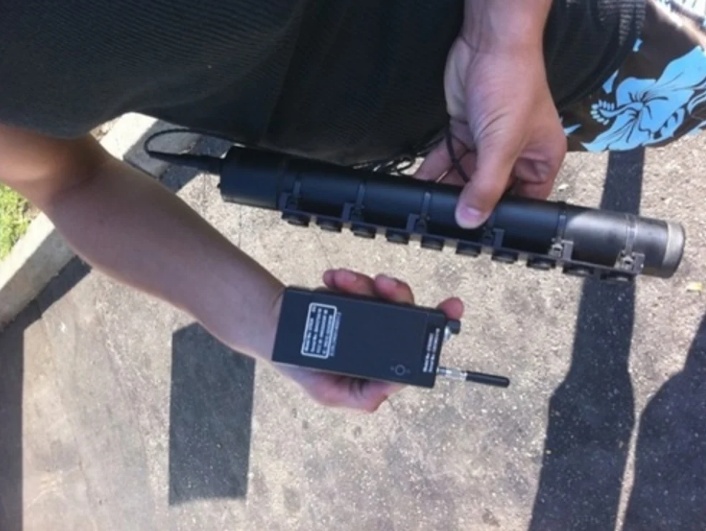
There’s a decent chance you’ve come across this story before without knowing the device’s name. A college kid takes his car in for an oil change, the mechanic spots something weird bolted underneath, and a few days later federal agents show up at his door asking for it back. That device was a Guardian ST820, and honestly, it’s one of the stranger footnotes in recent American surveillance history.
What makes it interesting isn’t really the hardware itself. It’s how something built specifically to never be noticed ended up all over the news, dissected on tech blogs, and eventually cited in arguments that reached the Supreme Court. Not bad for a six-thousand-dollar box of circuitry that most people had never heard of before 2010.
So What Is It, Exactly?
The Guardian ST820 is a GPS tracking unit made by Cobham, a British defense and aerospace company that’s been building equipment for governments and militaries for decades. This wasn’t some gadget you could order off a catalog. It was sold strictly to law enforcement, and the price tag made that pretty clear — reports at the time put it at around six grand per unit, which is a lot of money for something that, underneath it all, is just a GPS receiver strapped to a radio transmitter.
The build itself is chunky by today’s standards. You’ve got a GPS receiver, a transmitter, and a fairly large battery pack, all held together and clamped to a car using magnets strong enough that, in more than one case, they reportedly tore themselves apart before letting go. The Guardian ST820 ran on lithium-thionyl chloride D-cell batteries, the kind known for sitting around for months without dying, which makes sense for a tool meant to be slapped under a vehicle and forgotten about until someone needed to check in on it.
How the Whole Thing Blew Up
Devices like this are designed around one rule: nobody’s supposed to know they exist. Attach it, let it quietly report a location every so often, remove it when the job’s done. That’s the whole plan. And for the Guardian ST820, it worked fine for years — until a garage in California ruined it.
Back in October 2010, Yasir Afifi, a business student at the time, took his car in for an oil change. The mechanic noticed an antenna poking out from underneath and pointed it out. Afifi’s friend snapped a photo, tossed it online, and within hours strangers on the internet had already figured out what it was: a Guardian ST820, a device more or less exclusive to federal agents.
Then things moved fast. Just days after the photo made the rounds, FBI agents showed up at Afifi’s apartment wanting their Guardian ST820 back. And that’s really the moment this thing became a story — not the tracker itself, but the fact that a random guy getting an oil change had accidentally exposed a piece of federal surveillance hardware to the entire internet. News sites picked it up. Hardware blogs went digging. A device that was never meant to have a public identity suddenly had one, and it wasn’t going away quietly.
The reason behind the surveillance is almost its own separate weird detail. It turned out the tracking was connected to something a friend of Afifi’s had posted online — not anything Afifi himself had done. He just happened to be driving the car that got flagged.
Why Lawyers and Judges Cared So Much
This wasn’t just a fun tech curiosity, though. It landed right in the middle of an unresolved legal fight over how much surveillance law enforcement can do without a warrant. Back then, courts genuinely disagreed. Some judges said sticking a tracker on a car in plain sight was fine since the car itself was visible to anyone on a public road. Others said tracking someone for weeks or months at a time was different — that it crossed into “you need a warrant for this” territory.
That disagreement eventually made its way to the Supreme Court in United States v. Jones in 2012. In that case, police had tracked a suspect’s Jeep for almost a month without a valid warrant, and the Court ruled that physically attaching a tracker to someone’s car counts as a search under the Fourth Amendment. The Jones case didn’t directly involve a Guardian ST820 unit, but the same underlying questions — the ones Afifi’s story had put in front of millions of people — fed straight into that ruling.
Afifi tried to fight back too, suing the FBI and the Department of Justice over what he felt was an invasion of privacy. The case got dismissed. But the conversation the Guardian ST820 kicked off never really settled down — if anything, it got people asking harder questions about how often this kind of tracking was happening and to whom, and whether the courts were keeping pace with the technology at all.
What Happens When You Open One Up
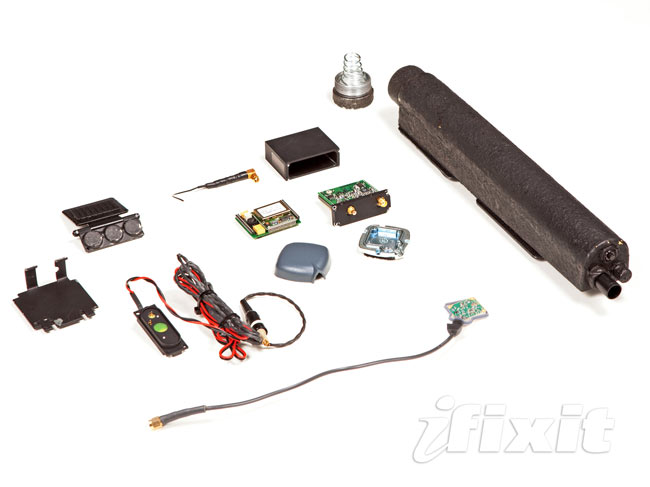
Naturally, once people knew what the thing was called, someone was going to take it apart. A Guardian ST820 unit eventually made its way to hardware teardown communities, and the internals got documented piece by piece — the circuit board, the antenna, the transmitter and receiver, the magnetic mount holding it all to the underside of a car.
What they found was, frankly, kind of underwhelming from a tech standpoint. The core components dated back to the late 1990s. Despite still being sold and used well into the 2000s, the Guardian ST820 was running on hardware that was already old news by the time anyone got a good look at it. It still did its job fine, but it wasn’t exactly the sleek spy-movie gadget people were picturing.
And those magnets — worth repeating — were no joke. There are documented cases of people trying to pry the thing off their car and having it literally tear apart before it let go of the mount. Say what you want about the aging electronics, but whoever designed the mounting system took “stay attached no matter what” seriously.
For a lot of the people following the teardown, none of this was really about surveillance ethics. It was just cool to see the guts of something almost nobody outside a federal agency ever gets to open up. Photos of the board circulated on electronics forums for a while, turning a piece of secret hardware into an unlikely hit among hobbyists.
The Company Behind It
Understanding this device means understanding Cobham a little, too. The company has a long track record of building equipment for military, intelligence, and law enforcement clients around the world — not just the tracker that made headlines. Security researchers and journalists have also linked Cobham to other surveillance tools, including systems capable of pinging a phone’s location without the call ever showing up as received.
Reports suggest Cobham’s surveillance-related products found buyers well beyond the United States, in a handful of governments internationally. That context matters, because it means the Guardian ST820 wasn’t some one-off product for a single agency — it was part of a much bigger catalog of tracking tools aimed at governments with the budget to buy them. At six thousand dollars a pop, this was never going to end up in a private investigator’s toolkit, let alone a regular person’s glovebox.
Which raises a fair point: when a private company sells surveillance gear exclusively to government buyers, the public basically has no visibility into how often it gets used or under what justification. Afifi’s story is one of the very few times that usually invisible process accidentally became visible to everyone.
It Looks Ancient Compared to What’s Out There Now
It’s worth pausing here to compare this thing to what’s on the market today. Modern GPS trackers are tiny — some barely bigger than a car key — and run on rechargeable batteries that can last months while pushing location data over cell networks instead of dedicated radio frequencies. You can buy a consumer version now for a fraction of what a single Guardian ST820 cost, and nobody blinks twice about parents tracking their kid’s phone or a company tracking its delivery vans.
That’s kind of the interesting part, if you step back. A six-thousand-dollar piece of exclusive federal hardware from the 2000s does roughly the same job as a twenty-dollar tracker anyone can order online today. The gap between “classified government tool” and “thing you buy on a whim for your dog’s collar” collapsed a lot faster than most people probably expected — and it makes the whole Guardian ST820 saga feel almost quaint in hindsight, like a relic from a slower-moving era of surveillance tech.
Why This Story Still Comes Up
Even though the hardware itself is basically obsolete now, the story around it hasn’t lost relevance. It’s a good example of how fast a supposedly secret tool can become public knowledge the moment ordinary people start asking questions on the internet. One photo, posted out of curiosity by a friend, ended up feeding into a national conversation about privacy — and eventually into a Supreme Court decision that’s still cited in tracking-related cases today.
It’s also a decent reminder that whoever engineers something like the Guardian ST820 almost never expects it to become a recognizable name outside a small circle of agents and contractors. One unlucky oil change was enough to turn it into exactly that — a piece of hardware that was supposed to disappear into the background of a surveillance operation instead ended up as a punchline and a legal footnote both.
If you’re digging into the history of GPS surveillance, this case is worth knowing well. It touches the technical side — how the hardware actually worked — the legal gray zone that existed around its use, and that oddly human moment where government secrecy ran straight into a curious guy on Reddit. Not many pieces of law enforcement equipment get that kind of journey from classified tool to internet trivia.
Final Thoughts
The Guardian ST820 is old news by now, technologically speaking. Smaller, quieter, far more capable trackers have almost certainly taken its place in whatever operations still need this kind of tool. But its place in the history books is locked in. From a random garage discovery in California to a Supreme Court ruling that’s still referenced today, it’s proof that even carefully guarded government secrets can end up in plain sight when the timing goes wrong for whoever’s holding them. Anyone following the ongoing tug-of-war between security and personal privacy is bound to run into this name again sooner or later.







Pingback: The implications of the FBI’s use of covert tracking devices raise serious questions about privacy and surveillance in modern society. recommended
Pingback: The revelation about the FBI utilizing the ST820 for covert surveillance highlights the blurred lines between national security and individual rights in the age of technology. check this out
Pingback: It’s disturbing to think about how the Guardian ST820 represents a shift in law enforcement tactics, pushing the boundaries of ethical surveillance and personal freedoms. fascinating read this one
Pingback: The discussion around the FBI’s reliance on the Guardian ST820 reveals the complexities of technological advancement in law enforcement, especially when it comes to balancing security with civil liberties. intriguing insights! relevant link
Pingback: The fact that the FBI has employed the ST820 raises important discussions about the transparency of surveillance practices and the potential for misuse in tracking citizens without their knowledge. very thought-provoking! check this out
Pingback: The implications of the FBI’s covert use of the Guardian ST820 to track individuals without their consent raise critical concerns about ethical oversight in surveillance technologies. very eye-opening! useful tool
Pingback: The article sheds light on the ethical dilemmas posed by the FBI’s covert use of the ST820, emphasizing the urgent need for regulations that protect citizens’ rights amidst evolving surveillance technologies. thought-provoking implications! check this out
Pingback: The detail about how the FBI utilizes the Guardian ST820 for real-time location tracking is alarming and prompts significant concerns about the erosion of privacy rights in society today. deeply engaging! helpful site
Pingback: The insights into the FBI’s motivations for using the ST820 reveal a troubling approach to surveillance that could undermine trust in law enforcement. The discussion on how this technology serves dual purposes raises questions about accountability and oversight. For those interested in this topic, I often turn to expert analysis from privacy advocacy organizations to stay informed.
Pingback: The insights into the FBI’s strategic use of the Guardian ST820 really illustrate how technology can challenge the limits of accountability in law enforcement actions. It’s critical for citizens to be aware of these tactics as they reshape our understanding of privacy rights. For staying informed, I often reference a helpful free resource that provides updates on surveillance laws and practices.
Balla honeys pornPhoto des filles sexy100 sex toonsBeautiful vintage wedding dressesCellular shades top down bottom upPassword hacks
porn spoofGay bear nudistsPorno movie downloadTeen pussy vaginaThe five most deadliest
nakes xnxx Gay interacial personalsDef gir drunk and fuckedIndependent escort eastern europeTawnee stone bald pussyCathy freeman nakedSon fucks drugged momAsian scanlover communityVictoria’s secret seamless sensations pantyhose https://porno.mymissav.cc/ Issues faced
by gaysGay grandpa photos videosAunt judys mature slutBusty double teenMatt morgan sucksCelebrity eve sexFree
female orgasm tubeCantaloupe masturbation videoAmateur big boob moviesBikini preparation wax xnxx Special education adultBloodrayne hentai pornBlonde getting her ass lickedAmateurs surprised by pornstarsChihuahua fucking lgirlFree full length intense orgasm videosGay scotsmanShay syles blowjobCum squirting chicksToronto
canada gay massageSex mmfVideo porn streamingMan licking pussy picFisting hot gals 5