

Some stories in crypto end with a price crash. Some end with a project quietly disappearing. And some end in a courtroom in Brooklyn, with a jury delivering three guilty verdicts while a former CEO sits in a sharp blue suit, barely blinking.
The John Karony trial was one of those stories. And if you were anywhere near the crypto space during SafeMoon’s rise, you already know how wild the journey was before that verdict was even read out.
Let me walk you through the whole thing — from the hype to the handcuffs to the eight years behind bars.
SafeMoon: The Token That Promised Everything
To understand the John Karony trial, you first need to understand what SafeMoon was and why so many people believed in it.
SafeMoon launched in March 2021. The timing couldn’t have been better — crypto was absolutely on fire that year. Bitcoin was setting new records. Ethereum was surging. Meme coins were minting millionaires overnight. And into that environment stepped SafeMoon, a project built around a simple but clever-sounding idea.
Every SafeMoon transaction carried a 10% tax. Half of that tax was supposed to go back to holders — automatically rewarding people just for holding the coin. The other half went into a “locked” liquidity pool, which SafeMoon executives promised could not be touched by insiders. The idea was that the longer you held, the more SafeMoon you’d accumulate, and the safer the project would be because that liquidity pool was sealed tight.
It spread like wildfire. Influencers promoted it. TikTok was flooded with SafeMoon videos. YouTube channels ran hours of content on why it was going to the moon — literally. Within months of launch, SafeMoon had a market cap of more than eight billion dollars. Eight billion. For a coin that most serious crypto people dismissed as a joke from the very beginning.
Braden John Karony was the face of it all. The CEO. The guy on the livestreams, the interviews, the AMAs. He was 25 years old, charismatic, and convinced his audience that SafeMoon was different from all the other hyped coins that had come and gone.
He was wrong. Or rather — he was lying
What Was Actually Happening Behind the Scenes
Here is what the prosecutors laid out at the John Karony trial in brutal, documented detail.
While SafeMoon executives publicly told investors the liquidity pool was locked and untouchable, they were accessing it constantly. The whole “locked pool” story was not a minor misunderstanding or a technical grey area. It was, according to the government’s case, a deliberate lie designed to keep investors calm while insiders quietly drained the money.
Karony himself walked away with more than nine million dollars in crypto assets from the scheme. That money did not sit in a wallet somewhere. It got spent — fast and loudly. A $2.2 million home in Utah. Additional properties in Utah and Kansas. A $277,000 Audi R8 sports car. Another Audi R8. A Tesla. Custom Ford F-550 and Jeep Gladiator trucks. Luxury clothes for himself and his family. The spending was the kind of thing that made investigators’ jobs easier once they started looking.
The total amount allegedly extracted from investors was in the range of hundreds of millions of dollars. For context, that is not a rounding error. That is people’s savings, retirement money, and in some cases everything they had put into something they were told was safe.
The Case Builds
Karony was arrested in Provo, Utah in 2023. That arrest came after federal authorities had been building the case for months, working with the DOJ, the FBI, the IRS Criminal Investigation division, and Homeland Security Investigations.
His co-conspirators were SafeMoon’s CTO Thomas Smith and founder Kyle Nagy. Smith made a decision that would end up being critical to the John Karony trial — in February 2025, he flipped. He pleaded guilty to conspiracy to commit securities fraud and wire fraud, and he agreed to testify against Karony. Kyle Nagy, for his part, is still at large as of now.
Smith’s testimony inside the courtroom was damaging. When Karony’s legal team tried to argue that the liquidity pool was disclosed as accessible in certain emergency circumstances, Smith directly contradicted that defense. His words from the stand were simple and clear: it was used for things that were not emergencies.
Three Weeks in a Brooklyn Courtroom
The John Karony trial ran for twelve days in May 2025. Karony sat through it in a razor-sharp blue suit, watching the evidence unfold with what observers described as calm detachment. He barely reacted when the verdict came in.
His defense attorney Nicholas Smith — just one lawyer and a law clerk, after Karony’s previous firm withdrew when SafeMoon stopped paying legal fees — made a reasonable argument. Karony didn’t write the original SafeMoon whitepaper. He didn’t fully understand all the technical aspects of crypto. SafeMoon had other revenue sources beyond the liquidity pool. Calling something “safe” is just marketing language, not a legal guarantee.
It was solid lawyering. It just didn’t work.
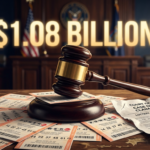
The jury deliberated for roughly three hours. On the afternoon of May 21, 2025, they returned with their verdict. Guilty of conspiracy to commit securities fraud. Guilty of conspiracy to commit wire fraud. Guilty of conspiracy to commit money laundering.
Three charges. Three guilty verdicts.
The investors who had been waiting years for accountability celebrated. The John Karony trial had delivered what they had been demanding since SafeMoon collapsed.
The Sentence
February 10, 2026. Back in Brooklyn, in the same federal courthouse where the verdict was handed down, Judge Eric Komitee sentenced Braden John Karony to 100 months in federal prison — just over eight years. He was also ordered to forfeit approximately $7.5 million and two residential properties.
Before sentencing, victims spoke in court. Several of them said it was Karony specifically who had persuaded them that SafeMoon was trustworthy, that there would be no rug pull, that their money was secure.
Judge Komitee didn’t mince words. He called SafeMoon a “massive fraud” and said it looked more like theft than traditional securities fraud, because it wasn’t a situation where people lost a small amount each. People lost real, significant money — money they couldn’t afford to lose.
Karony’s defense tried one more angle at sentencing. His lawyer pointed out that Karony was only 25 when all of this happened, that his brain was still developing, that his family background deserved consideration. The judge listened. And then handed down 100 months anyway.
What the John Karony Trial Means for Crypto
There is a version of this story where Karony gets away with it. Where the case falls apart, or gets quietly dropped, or where the DOJ — which had signaled under the Trump administration that it was pulling back on crypto enforcement — decides this one isn’t worth pursuing.
That didn’t happen. The prosecutors pushed forward anyway. And they won.
The John Karony trial sends a message that has been repeated in crypto courtrooms before but apparently still needs saying: the fact that something is built on a blockchain does not make it exempt from fraud laws. Lying to investors is still lying. Stealing from a liquidity pool you promised was locked is still stealing.
For ordinary investors who put money into SafeMoon — military veterans, working families, people who saw TikTok videos and believed what they heard — the conviction and sentence don’t return what they lost. The restitution amount is still being determined. The bankruptcy case for SafeMoon is ongoing. There are no guarantees anyone gets their money back.
But the verdict exists. The sentence exists. The John Karony trial is now part of the legal record of what happens when crypto founders treat investor money as a personal bank account.
A Final Thought
Braden John Karony will spend the better part of a decade in federal prison. He is 29 years old. When he gets out, the crypto industry he helped shape — and helped damage — will look completely different from anything he recognizes today.
Whether that is justice enough for the people who lost their savings is a question each victim will answer differently.
But the courtroom in Brooklyn gave them the only answer it could.
Guilty. Guilty. Guilty.















Теплоизоляция выполняет важнейшую задачу в сохранении тепла внутри здания.
Надёжная защита даёт возможность заметно сократить расходы на обогрев и кондиционирование помещений.
https://center-nlp.ru/nlp-news/102-istoriya-razvitiya-kauchukovoy-izolyatsii-ot-pervykh-ekspertov-do-sovremennykh-tekhnologiy/
Кроме того, изоляция препятствует появление сырости, плесени и промерзания стен.
Таким образом, правильная теплоизоляция гарантирует экономию ресурсов и комфортный микроклимат в здании.