

- What MagaCoinFinance Actually Is
- The Numbers Behind the Presale
- Tokenomics: Supply, Burns, and Distribution
- Security Audits and Legitimacy Claims
- The ROI Claims Worth Scrutinizing
- Why the Political Branding Matters
- How It Compares to Past Meme Coin Cycles
- Comparing It to Typical Presale Patterns
- What Happens After the Presale Ends
- Questions to Ask Before Buying In
- Red Flags Worth Watching For
- Final Thoughts
Every few months a crypto presale shows up that seems to be everywhere at once. Right now, that project is MagaCoinFinance. Scroll through crypto Twitter or a few Telegram groups and you’ll bump into it sooner or later.
So is it legit, or just another loud presale riding a news cycle? I dug through the coverage, the claims, and the numbers being thrown around. Here’s what actually holds up, and what deserves a raised eyebrow.
What MagaCoinFinance Actually Is
MagaCoinFinance is an Ethereum-based ERC-20 token, and it’s positioned itself somewhere between meme coin culture and openly political branding. The project calls itself community-driven and says it wants to pair viral, retail-friendly appeal with tokenomics that are a bit more thought-out than your average meme coin.
That’s the pitch, anyway. Instead of shipping a half-finished app and hoping people show up, the team behind MagaCoinFinance seems to have put most of its energy into the economics: presale structure, audits, supply mechanics. Which means there isn’t much of a live product to poke at yet. Most of what’s public about MagaCoinFinance right now is tokenomics, audit claims, and presale progress reports.
The Numbers Behind the Presale
Multiple crypto outlets report MagaCoinFinance has pulled in more than $16 million across its presale rounds, and a couple of write-ups push that figure closer to $17 million. Investor counts cited alongside those totals land somewhere between 14,000 and just over 15,000 people.
The presale runs on tiered pricing, so the cost per token climbs as each stage sells out. Nothing unusual there. It’s a pretty standard way to reward whoever gets in early and to manufacture a little urgency as later rounds fill up.
Coverage from late 2025 put the per-token price around $0.00052387, with the presale said to be roughly 93% through its final stage at that point. A few sources framed it as being right on the edge of moving from presale into public exchange trading.
Tokenomics: Supply, Burns, and Distribution
There’s a hard cap on supply here: 170 billion tokens total, with no mechanism to mint more later. It’s one of the things the project keeps repeating in its own materials, presumably because scarcity sells.
On top of the fixed cap, MagaCoinFinance uses a transaction burn. Every transaction reportedly burns 12% of the tokens involved, permanently shrinking the circulating supply. That’s an aggressive burn rate — higher than what you’ll see on a lot of comparable tokens.
As for distribution, only 60% of the total supply goes to presale buyers. The other 40% is set aside for liquidity, staking rewards, and marketing. The stated goal is to avoid the kind of lopsided ownership where a handful of wallets could dump the market whenever they feel like it.
Security Audits and Legitimacy Claims
Anytime a presale shows up asking for real money, the obvious question is whether there’s anything behind it besides marketing copy. MagaCoinFinance leans hard on audit claims to answer that.
According to several sources, the project went through a smart contract audit from HashEx, a fairly well-known name in blockchain security, and that audit reportedly turned up no critical or high-risk issues. Some later articles also mention a second audit from CertiK.
There’s also a KYC claim worth noting. Team members apparently operate under pseudonyms publicly, but the project says those same team members completed identity verification through a third-party KYC provider. So, in theory, someone knows who these people actually are, even if the public doesn’t.
Here’s the honest caveat, though: audits and KYC reduce certain risks. They cut down the odds of a straightforward smart contract exploit or an anonymous team just vanishing with the funds. What they don’t do is guarantee this thing succeeds, or that the token holds any particular value once it hits the open market. Those are two very different kinds of risk, and it’s easy to conflate them.
The ROI Claims Worth Scrutinizing
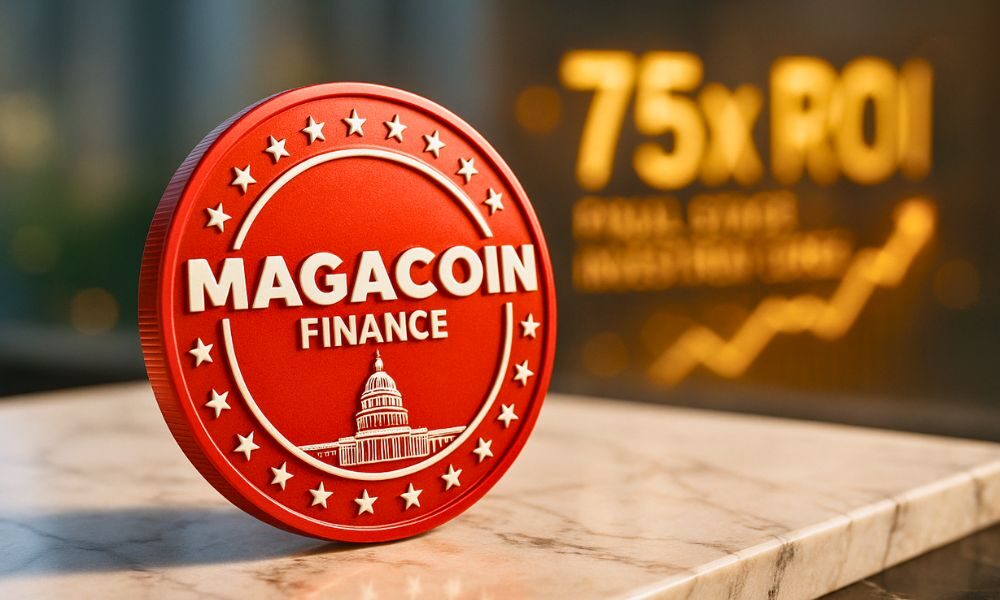
Now for the part that deserves the most skepticism. A handful of articles covering MagaCoinFinance cite projections of 50x to 75x returns by 2030. There’s also chatter about a possible exchange listing price around $0.007 per token.
Where are these numbers actually coming from? That’s worth asking. A lot of the coverage repeating these figures is published through wire services like GlobeNewswire, which is a press release distribution platform, not an independent newsroom. In plain terms: the project itself, or whoever’s handling its marketing, is often the source behind these projections, not some neutral analyst crunching numbers on their own.
That matters. Presale marketing loves throwing around big multiples because urgency sells tokens. Nobody independent has actually verified a 50x or 75x outcome for MagaCoinFinance, and frankly, projections at that scale should be read as marketing copy first, and anything resembling a forecast a distant second.
Why the Political Branding Matters
The name itself signals exactly what it’s going for: a direct nod to MAGA political culture, which the project has clearly embraced as its community hook. Politically branded meme coins aren’t new, but they’ve become a lot more common lately.
There’s an upside to that branding, obviously. It hands the project a built-in audience and a recognizable identity right out of the gate, not unlike how earlier meme coins rode internet culture and social virality to get noticed fast.
But there’s a flip side too. Political sentiment moves fast and unpredictably. When a token’s whole appeal is tied more to cultural or political identity than to any actual utility, that token tends to be a lot more exposed to sudden shifts in mood, good or bad.
How It Compares to Past Meme Coin Cycles
Worth zooming out here. Dogecoin and Shiba Inu both blew up mostly on internet culture and social momentum rather than any real technical use case, and both went through wild price swings once the broader public started paying attention.
MagaCoinFinance seems to be running a similar playbook, just with more structure bolted on. Tiered pricing, a hard supply cap, a burn mechanism — these all read like attempts to add discipline that a typical meme coin skips entirely, even while still leaning heavily on cultural appeal to get people in the door.
Does that extra structure actually make a difference long-term? Genuinely hard to say right now. Plenty of earlier meme coins also had burn mechanisms and fixed supplies, and the outcomes across that group have been all over the map — huge gains during a hype wave, brutal losses once the hype wore off.
Comparing It to Typical Presale Patterns
Zoom out even further and MagaCoinFinance follows a pattern you’ve probably seen a hundred times if you’ve spent any time in crypto: tiered pricing, an audit announcement, rising investor counts, urgency around limited spots left. It’s the standard playbook, more or less.
That alone doesn’t make it a scam. Plenty of legit projects run their presales this exact way. But the same playbook has also been used by countless presales that raised real money and then delivered basically nothing once the hype faded and the token actually started trading.
Having audits, KYC, and a fixed supply does put MagaCoinFinance a step above the most obviously sketchy presales, the ones that skip all of that entirely. Still, none of it guarantees a smooth launch or lasting price stability once the token, or any presale token really, actually hits an exchange.

What Happens After the Presale Ends
Once the presale wraps and the token generation event happens, buyers are supposed to head back to the project’s official site, connect the same wallet they used to purchase, and claim their tokens from there.
That’s when the real test starts. Presale excitement and actual post-launch performance often have almost nothing to do with each other. Plenty of tokens raise huge presale totals and then drop sharply within weeks of listing, once the artificial urgency of “limited stages” disappears and the market just… trades it like any other asset.
If you’ve bought in, or you’re thinking about it, keep an eye out specifically for confirmed listing announcements straight from official channels. Presale buyers tend to be the most exposed group once real trading kicks in, for better or worse.
Questions to Ask Before Buying In
Before putting money into this, ask a few blunt questions instead of just trusting the marketing. Has an actual, reputable exchange confirmed a listing, or is that still just a rumor floating around Telegram?
Who’s actually verified the audit and KYC claims, and can you check that yourself instead of taking a promotional article’s word for it? HashEx and CertiK both publish their reports publicly, and reading those directly beats relying on someone’s summary of them.
And maybe the most important question: what happens to the price once presale hype disappears and it’s just trading on the open market, where actual supply and demand take over instead of marketing pressure? That’s the question presale coverage almost never answers honestly, and it’s the one that matters most if you’re thinking past the initial buy.
Red Flags Worth Watching For
Even with the audits in place, there’s stuff here worth sitting with. An anonymous team, even one that’s supposedly passed KYC behind the scenes, is still harder to hold accountable than founders whose names and faces are public.
There’s also the heavy reliance on press-release coverage rather than independent reporting. Press releases are paid placements. They say what the project wants said, not what an outside reporter independently verified.
And again, those 50x to 75x return figures. Treat them skeptically no matter how many articles repeat the same numbers back to you. No presale can promise future returns, and multiples that big belong in marketing decks a lot more often than they show up in actual outcomes.
Final Thoughts
MagaCoinFinance has clearly built a large following, and it’s backed by real, checkable elements: completed audits, a fixed and shrinking token supply, tens of millions in reported funding. That puts it a cut above the sloppiest presale scams out there.
That said, the aggressive return projections, the reliance on paid press coverage, and the politically charged branding all deserve real caution. If you’re considering this, verify claims through official channels yourself, stay skeptical of the marketing, and only risk money you’re genuinely fine losing.
This article is for informational purposes only and does not constitute financial or investment advice. Cryptocurrency presales carry substantial risk, including the potential total loss of invested funds. Always conduct independent research and consult a licensed financial advisor before making investment decisions.








Interesting to see how MagaCoinFinance positions itself with those six bold claims, especially the focus on community involvement. Curious to see how they plan to back those assertions in practice. useful tool
It’s intriguing to consider the six bold claims made by MagaCoinFinance, particularly the emphasis on transparency as a core value. It will be interesting to see what mechanisms they implement to ensure they deliver on that promise and how it impacts their user base. this resource
The six bold claims by MagaCoinFinance certainly raise some eyebrows, especially the one about sustainability in their presale approach. I’m eager to see how they integrate sustainable practices into their operations and whether they can genuinely make a difference in the crypto space. This could set a positive precedent if they pull it off. helpful site
Fascinating discussion on the six bold claims by MagaCoinFinance! The idea of leveraging innovative technology to enhance user experience stands out. I’m eager to see how they will translate this concept into tangible features for their users and the overall impact this will have on the crypto space. good resource
The six bold claims from MagaCoinFinance indeed raise some compelling points, especially the one regarding security measures. It’s critical in the crypto world, and I’m curious about the specific strategies they’ll implement to safeguard user assets. This could set a promising precedent if they manage to deliver effectively on that front. worth a look
Compelling insights on the six bold claims from MagaCoinFinance! The claim regarding decentralized governance truly piques my interest. It will be fascinating to watch how they empower the community in decision-making and the potential effects this could have on user engagement and trust within the platform. recommended
Thought-provoking analysis of the six bold claims surrounding MagaCoinFinance! I find the commitment to sustainability particularly compelling. I’m interested to see how they plan to integrate eco-friendly practices into their operations and how that could differentiate them in the crowded crypto market. worth a look
Engaging overview of MagaCoinFinance’s six bold claims! I’m particularly drawn to their assertion about security features being a top priority. It will be intriguing to see how they implement robust measures to protect users’ assets and what innovative solutions they might propose to stand out in this critical area. check this out
Intriguing analysis of the six bold claims from MagaCoinFinance! The highlight on security measures is particularly relevant in today’s crypto landscape. I’m curious to see what specific technologies they will implement to ensure user data protection and how that could influence overall trust in their platform. this resource
I find it especially intriguing that the MagaCoinFinance review highlights their approach to security as one of the bold claims. In an era where crypto vulnerabilities are a major concern, it will be interesting to see what specific strategies they implement to safeguard user assets and maintain trust in their platform. worth a look
The six bold claims made by MagaCoinFinance certainly present an ambitious vision for the crypto presale landscape. The focus on security measures as one of their key selling points is particularly crucial in today’s environment. I’m eager to see what specific strategies and technologies they implement to build user confidence and mitigate risks in their platform. good resource